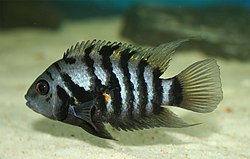
Bulging eyes in Convict Cichlids, also known as Popeye, is a serious condition often indicating an infection or disease. This condition can lead to severe discomfort and even death if not addressed promptly. Owners should first consider the fish's environment and recent changes to the aquarium.
Convict Cichlid Bulging Eyes (Popeye): Common Causes
Bacterial Infection
Most LikelyBacterial infections are common, especially if the fish has been stressed or if the tank water quality is poor.
Poor Water Quality
Most LikelyHigh ammonia or nitrite levels can stress the fish, leading to Popeye.
Malnutrition
PossibleLack of essential nutrients, particularly vitamins, can cause Popeye.
Physical Trauma
PossibleAn injury to the head can cause eye swelling.
Genetic Factors
Less CommonSome Convict Cichlids may have a predisposition to Popeye, which can be genetic.
How to Diagnose the Cause
Follow these steps in order. Stop when you identify a likely cause and move to treatment.
- Inspect the aquarium for signs of ammonia or nitrite spikes.
Check the water parameters with a test kit.
Recommended: test kit - Observe the fish for other signs of stress or illness.
Look for changes in color, appetite, or swimming patterns.
- Review the fish's diet to ensure it's balanced and nutrient-rich.
Include vitamin supplements in the diet if necessary.
- Check the tank for any physical damage or aggression.
Ensure the fish is not being bullied or injured by tank mates.
- Consider the fish's genetic background.
If Popeye recurs, it may be genetic and require long-term management.
How to Treat Convict Cichlid Bulging Eyes (Popeye)
- Perform a 25-50% water change to reduce ammonia and nitrite levels.
Use a dechlorinator to treat new water before adding it to the tank.
- Administer antibiotics as directed by a veterinarian, such as erythromycin or tetracycline.
Follow the dosage and treatment schedule carefully.
- Ensure the fish has a nutritious diet rich in vitamins and minerals.
Include vitamin C supplements in the diet to support immune function.
- Remove any aggressive tank mates and provide a quiet, undisturbed area for the fish.
This will help reduce stress and prevent further injury.
- Monitor the fish closely and continue treatment until symptoms improve.
It may take several weeks for the fish to recover fully.
How to Prevent Convict Cichlid Bulging Eyes (Popeye)
When to See a Vet
🔬 AI Symptom Checker
Not sure what's wrong? Describe your fish's symptoms to the FishCare AI and get an instant diagnosis.
Check Symptoms →Frequently Asked Questions
This guide was reviewed for biological accuracy and practical aquarium care guidance. Always test water parameters before treating a sick fish — poor water quality is the most common root cause. Consult an aquatic veterinarian if symptoms persist after 48 hours of correct treatment.
Sources: Merck Veterinary Manual — Aquarium Fishes · UF/IFAS Extension — Fish Health Management