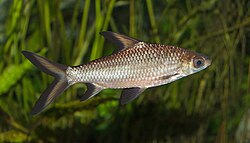
Spots on fins in Bala Sharks can be indicative of various issues, from fungal infections to internal parasites. It is a serious condition that can lead to secondary infections if not addressed promptly. Owners should first consider the tank conditions and recent changes to the fish's environment or diet.
Bala Shark Spots on Fins: Common Causes
Fungal Infection
Most LikelySpots may appear due to fungal growth on the fin tissue, often following stress or poor water quality.
Internal Parasites
Most LikelyParasites like anchor worms can cause spots on fins, usually accompanied by other symptoms like clamped fins or loss of appetite.
Poor Water Quality
PossibleUnbalanced pH, high ammonia or nitrite levels can stress the fish, leading to spots on the fins.
Physical Injury
PossibleFin nipping by tank mates can cause spots on the fins, often seen in crowded tanks.
Poor Diet
Less CommonInadequate nutrition can weaken the fish's immune system, making it more susceptible to infections and spots on the fins.
How to Diagnose the Cause
Follow these steps in order. Stop when you identify a likely cause and move to treatment.
- Inspect the fish for other signs of disease, such as clamped fins, loss of appetite, or lethargy.
Look for external parasites or internal signs that might indicate a different problem.
Recommended: magnifying glass - Check the water parameters for ammonia, nitrite, and nitrate levels.
Use a test kit to ensure the water quality is within the optimal range for Bala Sharks.
Recommended: water test kit - Observe the fish's behavior and diet history to identify any recent changes.
Consider any new foods, tankmates, or environmental stressors that may have contributed to the condition.
- Gently examine the fins for the presence of parasites or other abnormalities.
Use a fine-tooth comb or a magnifying glass to detect any parasites or fungi.
Recommended: fine-tooth comb - Consider a professional diagnosis if the cause is not clear or if the condition worsens.
A vet may perform additional tests to identify the exact cause of the spots.
How to Treat Bala Shark Spots on Fins
- Improve water quality by increasing water changes and treating with a fungicide or antibacterial agent if necessary.
Maintain a consistent pH and remove any debris or uneaten food from the tank.
- Administer an appropriate medication for parasites, following the vet's instructions.
Use treatments specifically designed for the type of parasite detected.
- Ensure the fish is receiving a balanced diet rich in vitamins and minerals.
Consider supplementing the diet with vitamins or a varied diet of high-quality foods.
- Provide a stress-free environment by reducing tank mates or providing hiding spots.
Avoid overcrowding and ensure the tank is well-maintained to prevent further stress.
- Monitor the fish's progress and adjust treatment as needed.
Regularly assess the fish's health and water parameters to ensure the condition is improving.
How to Prevent Bala Shark Spots on Fins
When to See a Vet
🔬 AI Symptom Checker
Not sure what's wrong? Describe your fish's symptoms to the FishCare AI and get an instant diagnosis.
Check Symptoms →Frequently Asked Questions
This guide was reviewed for biological accuracy and practical aquarium care guidance. Always test water parameters before treating a sick fish — poor water quality is the most common root cause. Consult an aquatic veterinarian if symptoms persist after 48 hours of correct treatment.
Sources: Merck Veterinary Manual — Aquarium Fishes · UF/IFAS Extension — Fish Health Management