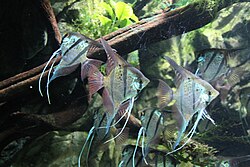
Swimming sideways in Freshwater Angelfish can indicate serious health issues, often leading to life-threatening consequences. It is crucial for owners to address this problem promptly by identifying the underlying cause and providing appropriate care.
Freshwater Angelfish Swimming Sideways: Common Causes
Poor Water Quality
Most LikelyHigh ammonia or nitrite levels can cause swim bladder issues, leading to sideways swimming.
Swim Bladder Disorder
Most LikelyInflammation or damage to the swim bladder can prevent proper swimming orientation.
Infection
PossibleBacterial infections, such as dropsy or ich, can affect the swim bladder and lead to sideways swimming.
Nutritional Deficiencies
PossibleLack of specific nutrients can lead to swim bladder problems and unbalanced swimming movements.
Stress or Trauma
Less CommonStress or physical injury can temporarily affect swimming behavior, but usually not as a chronic condition.
How to Diagnose the Cause
Follow these steps in order. Stop when you identify a likely cause and move to treatment.
- Observe the fish's behavior and appearance for any other signs of illness or stress.
Check for redness, fin damage, or bloating.
- Test the water parameters for ammonia, nitrite, and nitrate levels.
Use a water test kit to measure these values.
Recommended: Water test kit - Check the diet and confirm it meets the dietary needs of Freshwater Angelfish.
Ensure a varied diet including high-quality flake food, vegetables, and live or frozen foods.
- Inspect the tank environment for any potential stressors, such as aggressive tankmates or poor tank maintenance.
Ensure the tank is well-maintained with adequate filtration and water flow.
- Consider recent changes to the aquarium, such as new tankmates or water changes.
Changes can be a source of stress that affects swimming behavior.
How to Treat Freshwater Angelfish Swimming Sideways
- Improve water quality by performing regular water changes and maintaining appropriate ammonia, nitrite, and nitrate levels.
Water changes should be at least 25% every week.
- Treat the swim bladder disorder with medication, if necessary, following the veterinarian's instructions.
Medications may include swim bladder support supplements or antibiotics.
- Adjust the diet to include more easily digestible foods and ensure a balanced nutrient intake.
Feeding smaller, more frequent meals can also help.
- Remove any stressors from the tank environment and provide a comfortable space for the fish to rest.
This may involve rearranging decorations or adding more hiding spots.
- Monitor the fish closely for any improvement and continue treatment until symptoms resolve.
Do not hesitate to consult a vet if the condition worsens or does not improve.
How to Prevent Freshwater Angelfish Swimming Sideways
When to See a Vet
🔬 AI Symptom Checker
Not sure what's wrong? Describe your fish's symptoms to the FishCare AI and get an instant diagnosis.
Check Symptoms →Frequently Asked Questions
This guide was reviewed for biological accuracy and practical aquarium care guidance. Always test water parameters before treating a sick fish — poor water quality is the most common root cause. Consult an aquatic veterinarian if symptoms persist after 48 hours of correct treatment.
Sources: Merck Veterinary Manual — Aquarium Fishes · UF/IFAS Extension — Fish Health Management