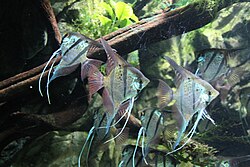
Spots on fins in Freshwater Angelfish are often a sign of stress, poor water quality, or parasitic infections. These spots can be serious as they may indicate internal health issues. It is crucial for owners to identify and address the root cause promptly.
Freshwater Angelfish Spots on Fins: Common Causes
Poor Water Quality
Most LikelyHigh levels of ammonia, nitrites, or nitrates can stress the fish and weaken its immune system, leading to spots on fins.
Parasites
Most LikelyIch, flukes, or other parasites can cause spots on the fins, often accompanied by other symptoms like scratching or loss of appetite.
Poor Diet
PossibleInadequate nutrition or feeding inappropriate foods can weaken the angelfish's immune system, making it more susceptible to infections that affect the fins.
Bacterial Infections
PossibleBacterial infections such as fin rot can cause spots on the fins, typically accompanied by other symptoms like fin erosion or redness.
Physical Damage
Less CommonPhysical damage from tankmates or handling can lead to spots on the fins, though this is less common and typically accompanied by other injuries.
How to Diagnose the Cause
Follow these steps in order. Stop when you identify a likely cause and move to treatment.
- Perform a water quality test
Check ammonia, nitrite, and nitrate levels to assess the overall water quality.
Recommended: Water test kit - Observe the fish's behavior
Look for signs of stress, such as scratching, loss of appetite, or aggression, which may accompany the spots.
- Inspect the fish's entire body
Check for other signs of disease, such as spots on the body, ulcers, or clamped fins.
- Consider the fish's environment
Evaluate tank conditions, including tank mates, decorations, and water parameters, for potential stressors.
- Consult with a vet
If the cause is not clear, seek professional advice for a thorough examination.
How to Treat Freshwater Angelfish Spots on Fins
- Improve water quality
Increase water changes to remove toxins and maintain appropriate levels of ammonia, nitrite, and nitrate.
- Treat for parasites
Use a recommended treatment for parasites, such as copper-based medications, following the instructions carefully.
- Address dietary issues
Ensure a balanced diet rich in vitamins and minerals, and avoid overfeeding or feeding inappropriate foods.
- Treat for bacterial infections
If a bacterial infection is present, use an appropriate antibiotic treatment under veterinary supervision.
- Prevent future occurrences
Regularly monitor water quality, maintain a stress-free environment, and provide appropriate tank mates and decorations.
How to Prevent Freshwater Angelfish Spots on Fins
When to See a Vet
🔬 AI Symptom Checker
Not sure what's wrong? Describe your fish's symptoms to the FishCare AI and get an instant diagnosis.
Check Symptoms →Frequently Asked Questions
This guide was reviewed for biological accuracy and practical aquarium care guidance. Always test water parameters before treating a sick fish — poor water quality is the most common root cause. Consult an aquatic veterinarian if symptoms persist after 48 hours of correct treatment.
Sources: Merck Veterinary Manual — Aquarium Fishes · UF/IFAS Extension — Fish Health Management