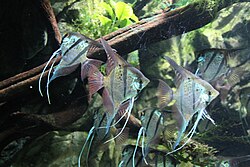
Bulging eyes, or Popeye, in Freshwater Angelfish is a serious condition often indicating an underlying health issue. It can lead to blindness and even death if not treated promptly. Owners should first ensure the tank conditions are optimal and consider the possibility of infection or malnutrition.
Freshwater Angelfish Bulging Eyes (Popeye): Common Causes
Poor Water Quality
Most LikelyHigh ammonia or nitrite levels can cause Popeye.
Malnutrition
Most LikelyLack of proper nutrition, especially vitamin C, can lead to Popeye.
Infection
Most LikelyBacterial infections, such as Aeromonas or Saprolegnia, can cause Popeye.
Physical Trauma
PossibleBeing bumped or hit by tank decor can cause Popeye.
Genetic Factors
Less CommonSome angelfish may be predisposed to Popeye due to genetics.
How to Diagnose the Cause
Follow these steps in order. Stop when you identify a likely cause and move to treatment.
- Inspect the fish for other signs of illness, such as loss of appetite or coloration changes.
Look for additional symptoms to help determine the cause.
- Test the water parameters for ammonia, nitrite, and nitrate levels.
Use a water test kit to ensure the tank conditions are within the optimal range.
Recommended: Water test kit - Check the diet to ensure it is balanced and includes vitamin C supplements.
Vitamin C deficiency is a common cause of Popeye.
- Observe the fish's behavior and interactions with tankmates to rule out physical trauma.
Physical trauma can mimic Popeye symptoms.
- Consult with a vet or experienced aquarist if the cause remains unclear.
Professional advice is crucial for accurate diagnosis.
How to Treat Freshwater Angelfish Bulging Eyes (Popeye)
- Improve water quality by performing regular water changes and treating with appropriate water conditioners.
This can help reduce ammonia and nitrite levels.
- Adjust the diet to include a variety of high-quality foods with vitamin C, such as angelfish flakes or pellets.
Ensure the diet is balanced and rich in nutrients.
- Administer antibiotics if an infection is suspected, following the vet's instructions.
Antibiotics should be used with caution and only under professional guidance.
- Isolate the affected fish to prevent the spread of infection to other tankmates.
This is important to control the disease and maintain overall tank health.
- Monitor the fish's progress and continue treatment until the symptoms resolve.
Patience is key, as recovery can take time and may require ongoing care.
How to Prevent Freshwater Angelfish Bulging Eyes (Popeye)
When to See a Vet
🔬 AI Symptom Checker
Not sure what's wrong? Describe your fish's symptoms to the FishCare AI and get an instant diagnosis.
Check Symptoms →Frequently Asked Questions
This guide was reviewed for biological accuracy and practical aquarium care guidance. Always test water parameters before treating a sick fish — poor water quality is the most common root cause. Consult an aquatic veterinarian if symptoms persist after 48 hours of correct treatment.
Sources: Merck Veterinary Manual — Aquarium Fishes · UF/IFAS Extension — Fish Health Management