“Snakehead” covers more than 50 described Channa species plus three African Parachanna, and the trade names attached to them are a mess. “Dwarf snakehead” has been used for at least six different fish, “red snakehead” usually means a juvenile of a species that grows to four feet, and “blue snakehead” is a colour morph label rather than a species. Buy on the scientific name. The difference between Channa andrao and Channa micropeltes is the difference between a 30-gallon tank and a swimming pool.
Trade Names Decoded
| Common name in shops | Usually means | Adult size |
|---|---|---|
| Dwarf snakehead | C. andrao, C. bleheri, C. gachua, C. limbata | 4–8 in |
| Blue snakehead / blue bleheri | C. andrao | 4–5 in |
| Rainbow snakehead | C. bleheri | 6–7 in |
| Peacock snakehead | C. pulchra | 10–12 in |
| Golden cobra snakehead | C. aurantimaculata | 14–16 in |
| Golden snakehead | C. stewartii (sometimes C. aurantimaculata) | 10–12 in |
| Emperor snakehead | C. marulioides | 24–26 in |
| Bullseye / great snakehead | C. marulius | 3–4 ft |
| Red snakehead / toman | C. micropeltes juvenile | 3–4 ft as an adult |
| Giant snakehead | C. micropeltes | 3–4 ft |
| Striped / chevron snakehead | C. striata | 2–3 ft |
| Northern snakehead | C. argus | 2–3 ft |
| Chinese snakehead | C. asiatica | 12–13 in |
Dwarf Snakeheads (4–8 inches)
These are the only Channa that belong in a normal aquarium. All are from the gachua group, all are paternal mouthbrooders, and all prefer cooler, softer water than most tropical fish.
Channa andrao — Blue Snakehead / Dwarf Channa
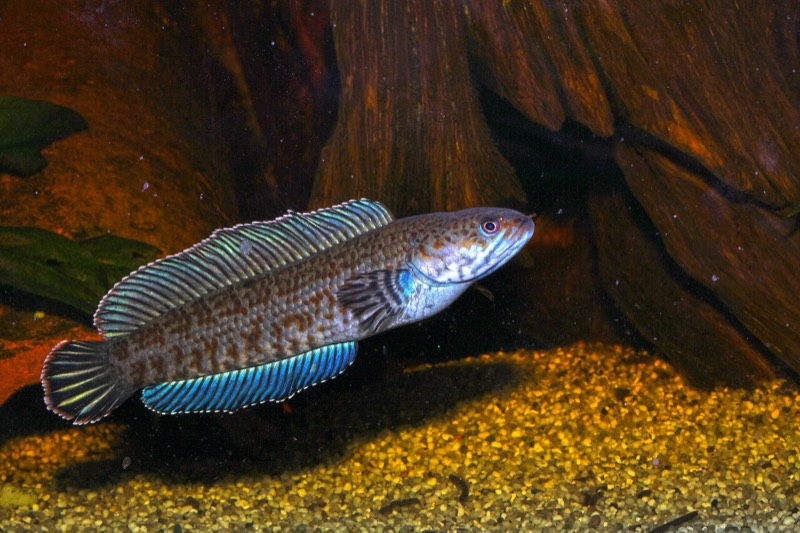
- Size: 4–5 in (10–13 cm) — the smallest snakehead in the trade
- Origin: Lefraguri swamp, West Bengal, India
- Temperature: 64–79°F (18–26°C), with a winter cooldown
- Tank: 30 gallons for a pair
- Temperament: Mildest of the genus; pairs bond strongly
Described only in 2013 and separated from C. bleheri, which is why it is still sold as “blue bleheri”. Deep blue-black body, red-and-white fin margins that intensify with age. If you want one snakehead and you can legally have it, this is the one.
Channa bleheri — Rainbow Snakehead
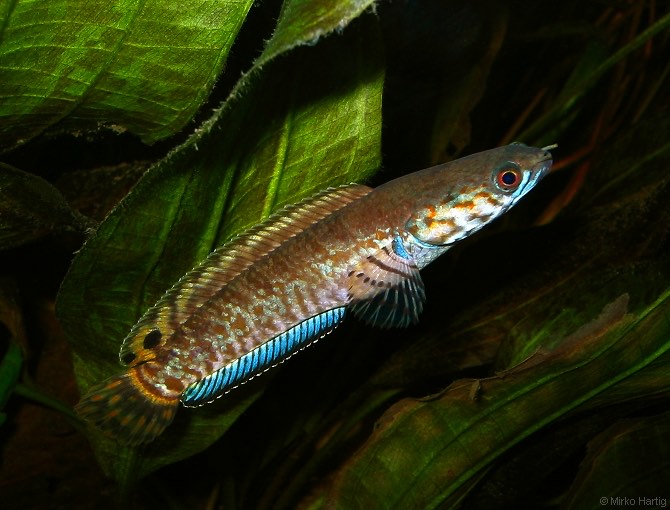
- Size: 6–7 in (15–18 cm)
- Origin: Brahmaputra basin, Assam, India
- Temperature: 68–79°F (20–26°C)
- Tank: 40–55 gallons for a pair
- Notable: Lacks pelvic fins, like C. asiatica
Orange, red and cream mottling over a warm brown base. Sociable by snakehead standards and one of the few species sometimes kept as a small group in a large tank of grown-together juveniles.
Channa gachua and Channa limbata — Dwarf / Brown Snakehead
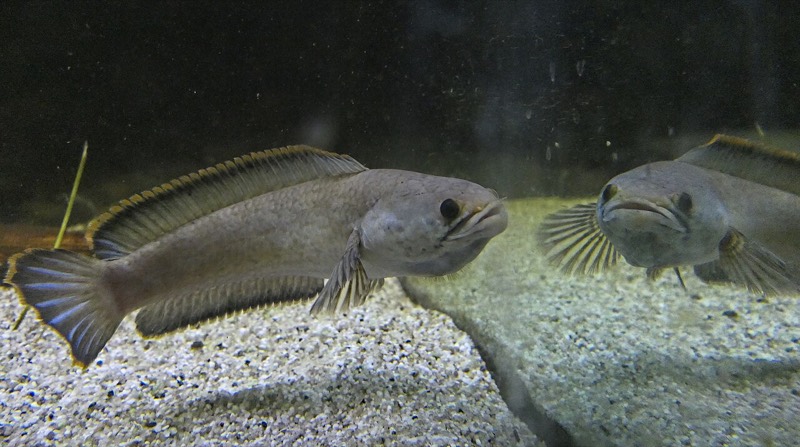
C. gachua is best understood as a species complex spread from Iran to Indonesia. Many regional populations have been split off into separate species — C. limbata, C. harcourtbutleri, C. burmanica and others — and shop stock labelled “gachua” may be any of them. Expect 6–8 inches, 55 gallons, 68–79°F, and considerable variation in temperament between populations.
Medium Snakeheads (10–16 inches)
Channa pulchra — Peacock Snakehead
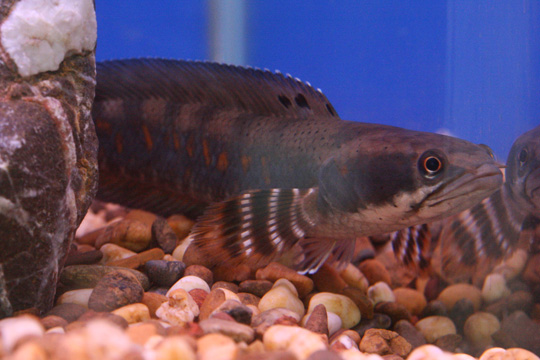
10–12 inches, from the Rakhine Yoma range of Myanmar. Blue-green iridescent spotting over a bronze base. Wants 75 gallons minimum, 68–79°F and a distinct cool season. More territorial than the true dwarfs but manageable as a single fish or bonded pair.
Channa aurantimaculata — Golden Cobra Snakehead
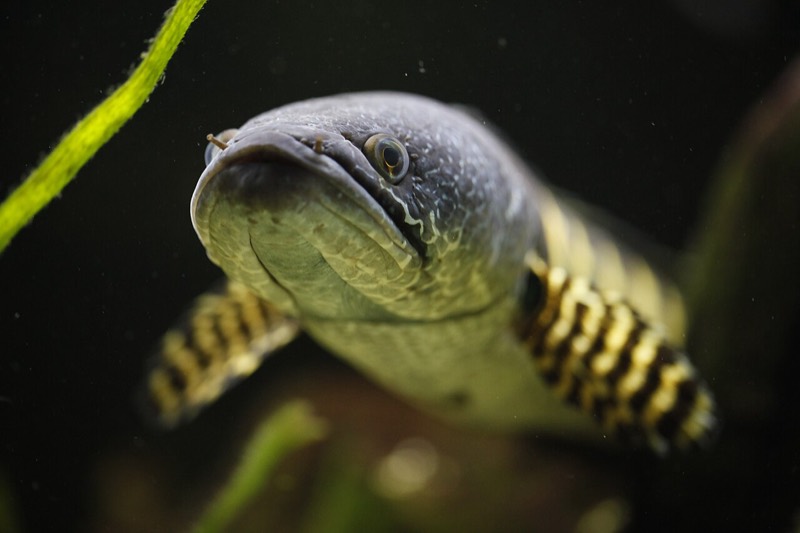
14–16 inches of black body slashed with orange bars, from the Dibrugarh district of Assam. Spectacular and expensive. Needs 125 gallons, 61–79°F and a genuine winter cooldown — kept warm year-round it declines within a few years. Aggressive to conspecifics outside of a bonded pair.
Channa asiatica — Chinese Snakehead
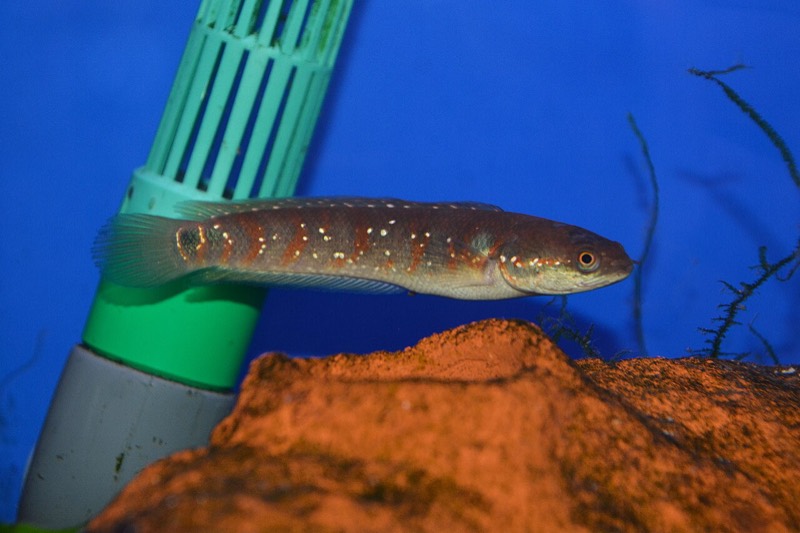
12–13 inches, native to southern China and Taiwan. Subtropical: comfortable from the low 50s°F to the upper 70s°F, so it can be kept unheated in many homes. Lacks pelvic fins. A confident, personable fish that learns to take food from tongs quickly.
Large and Giant Snakeheads (2–4 feet)
Channa micropeltes — Giant / Red Snakehead
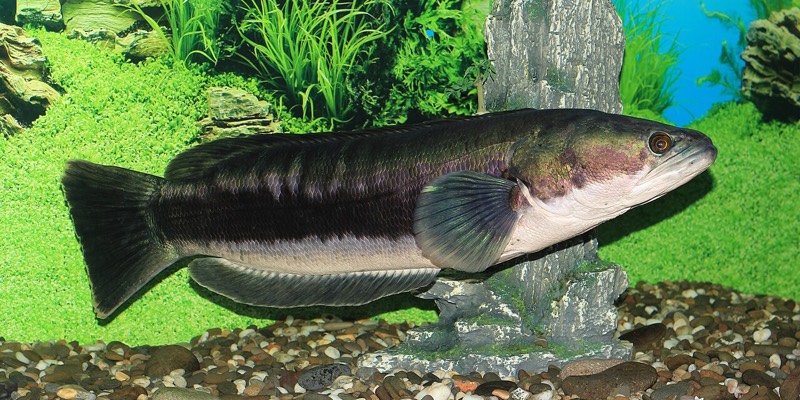
The largest commonly traded species, reaching 3–4 ft (up to about 130 cm). Juveniles are red and black; adults are blue-grey with a pale belly. Fast-growing, powerfully built and the most aggressive snakehead in the trade — adults will strike at hands during maintenance. Tropical: 75–82°F. Public aquarium territory.
Channa marulius — Bullseye Snakehead
3–4 ft, native from India through Southeast Asia and established as an invasive population in Broward County, Florida. Named for the black eyespot ringed in orange on the caudal peduncle, which is retained into adulthood. Tropical, 75–82°F.
Channa marulioides — Emperor Snakehead
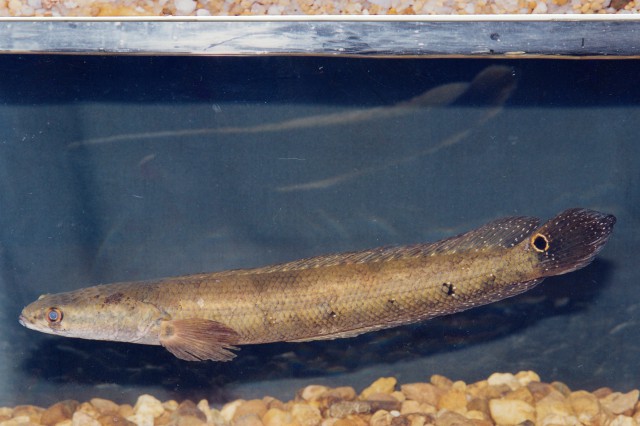
24–26 inches, from Borneo, Sumatra and peninsular Malaysia. Often considered the most beautiful of the large species: a bold scale-edge pattern in gold and black with a caudal eyespot. Needs 250–400 gallons and 75–82°F.
Channa striata — Striped / Chevron Snakehead
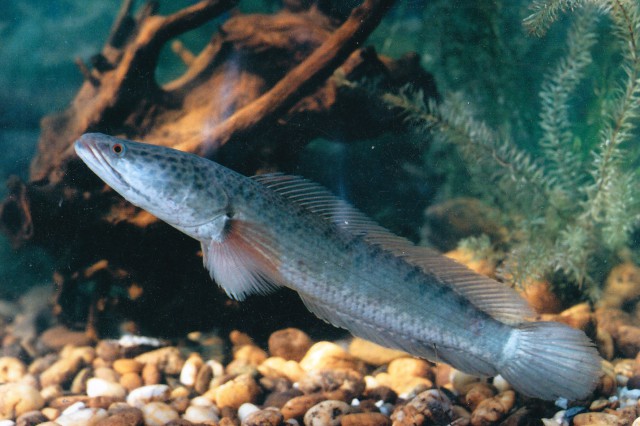
2–3 ft. The most widely farmed snakehead in Asia and a staple food fish, which is why it is cheap and frequently exported. Extremely hardy, extremely adaptable, and correspondingly the species most likely to establish itself if released. Tropical, 75–82°F.
Channa argus — Northern Snakehead
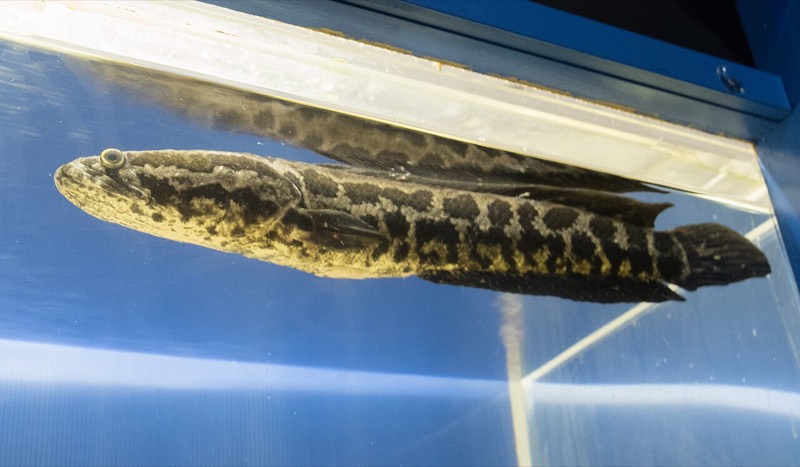
2–3 ft, native to China, Korea and eastern Russia. Genuinely temperate — it survives under ice and tolerates 50–79°F — which is exactly why it established in the Potomac River after 2002 and why it is banned across the EU and UK as well as the US. Not an aquarium fish under any circumstances.
Channa lucius and Channa barca
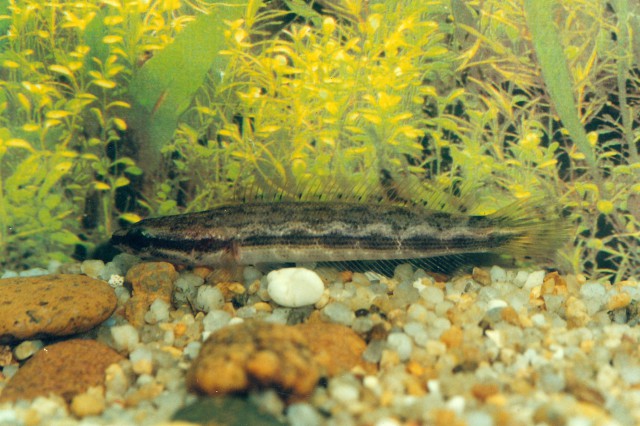
C. lucius reaches about 16–20 inches and is a slender, heavily barred forest-stream species from Southeast Asia. C. barca, from a small area of the Brahmaputra in Assam, reaches roughly 3 ft, lives in burrows dug into riverbanks, and is one of the most expensive freshwater aquarium fish in the world — individual specimens have sold for thousands of dollars. Both are advanced-keeper fish at best.
Picking the Right Species
| If you have… | Realistic options |
|---|---|
| 30–40 gallons | C. andrao (single or bonded pair) |
| 55 gallons | C. bleheri, C. gachua, C. limbata |
| 75–125 gallons | C. pulchra, C. asiatica, C. stewartii, C. aurantimaculata |
| 250–400 gallons | C. marulioides, C. lucius |
| Under 30 gallons | No snakehead. Consider a betta or dwarf cichlid instead. |
Once you have chosen, size the tank properly on the snakehead tank size guide and set the temperature from the water parameters guide — the subtropical species are the ones most often killed by kindness in a heated tropical tank.
Frequently Asked Questions
What is the smallest snakehead fish?
Channa andrao, the blue dwarf snakehead from West Bengal, is the smallest species in the trade at 4-5 inches. Channa bleheri, the rainbow snakehead, is next at 6-7 inches. Both can be kept in a 30-55 gallon tank with a sealed lid.
What is a red snakehead fish?
Red snakehead is a trade name for juvenile Channa micropeltes, the giant snakehead. The red and black striping fades by about 8 inches and the fish grows roughly an inch a month to over 3 feet, so it is not a home aquarium species despite being sold at 3 inches.
What is the difference between Channa andrao and Channa bleheri?
Channa andrao was split from Channa bleheri in 2013 and is still sold as blue bleheri. Andrao stays smaller at 4-5 inches with a deep blue-black body and red-and-white fin margins, while bleheri reaches 6-7 inches with orange and cream mottling on a warm brown base.
Which snakehead is best for a home aquarium?
Channa andrao is the best choice where snakeheads are legal: 4-5 inches, the mildest temperament in the genus, and comfortable in a 30-gallon tank. Channa bleheri and Channa asiatica are good second choices for 55 and 75 gallon tanks respectively.
How big does a northern snakehead get?
Channa argus reaches 2-3 feet (roughly 60-100 cm). It is a temperate species that tolerates 50-79F and survives under ice, which is why it established in the Potomac River and is banned across the US, UK and EU.