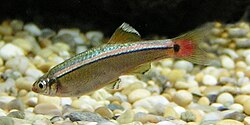
Bloating in White Cloud Mountain Minnows is often a sign of a serious health issue that requires immediate attention. It can be indicative of internal parasites, swim bladder disorders, or bacterial infections. Early detection and intervention are crucial to prevent further complications and ensure the fish's survival. Owners should first assess the fish's environment and diet, as these factors play a significant role in their health.
White Cloud Mountain Minnow Bloated or Swollen: Common Causes
Internal Parasites
Most LikelyInfestations can lead to bloating as the fish's body tries to expel the parasites.
Swim Bladder Disorders
PossibleImbalance in the swim bladder can cause bloating, often accompanied by swimming difficulties.
Bacterial Infections
Most LikelyBacterial infections may result in bloating and can be life-threatening if not treated promptly.
Improper Diet
PossibleOverfeeding or feeding the wrong types of food can lead to bloating and other health problems.
Stress
Less CommonHigh levels of stress can lead to bloating in minnows, often due to rapid changes in water parameters or aggression.
How to Diagnose the Cause
Follow these steps in order. Stop when you identify a likely cause and move to treatment.
- Examine the fish's behavior and appearance for other signs of illness such as clamped fins or lack of appetite.
Check for signs like clamped fins, lack of appetite, or aggression.
- Perform a water test to check for ammonia, nitrite, and nitrate levels.
These parameters are crucial for overall fish health.
Recommended: Water testing kit - Look for evidence of external parasites like worms or lice.
Gently observe the fish's body for any visible parasites.
- Conduct a fecal float to detect internal parasites.
This involves collecting a small amount of feces and observing it under a microscope.
Recommended: Fecal float kit - Inspect the fish's diet to ensure it is appropriate and not overfeeding the fish.
White Cloud Minnows thrive on a varied diet of live, frozen, and freeze-dried foods.
How to Treat White Cloud Mountain Minnow Bloated or Swollen
- Treat the aquarium with an appropriate antiparasitic medication as recommended by a vet.
Follow the treatment instructions carefully to avoid harming the fish.
- Adjust the diet to a species-specific one and reduce the feeding frequency to once or twice a day.
Use high-quality food that mimics their natural diet.
- Improve water quality by performing frequent water changes and maintaining a consistent temperature and pH level.
Keep the water conditions stable for the well-being of the fish.
- If the swim bladder is affected, consider using swim bladder medication as directed by a vet.
This will help in correcting the swim bladder disorder.
- Ensure the fish is not under stress by providing hiding spots and minimizing aggressive tankmates.
Create a peaceful environment to reduce stress levels.
How to Prevent White Cloud Mountain Minnow Bloated or Swollen
When to See a Vet
🔬 AI Symptom Checker
Not sure what's wrong? Describe your fish's symptoms to the FishCare AI and get an instant diagnosis.
Check Symptoms →Frequently Asked Questions
This guide was reviewed for biological accuracy and practical aquarium care guidance. Always test water parameters before treating a sick fish — poor water quality is the most common root cause. Consult an aquatic veterinarian if symptoms persist after 48 hours of correct treatment.
Sources: Merck Veterinary Manual — Aquarium Fishes · UF/IFAS Extension — Fish Health Management