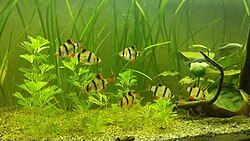
White spots on a Tiger Barb's body and fins are a sign of Ichthyophthirius multifiliis, a highly contagious disease. This is a serious condition, potentially fatal if left untreated. Owners must be aware of the urgency to isolate the affected fish and initiate treatment promptly.
Tiger Barb White Spots (Ich): Common Causes
Poor Water Quality
Most LikelyAmmonia, nitrite, and nitrate levels above safe thresholds can weaken the fish's immune system, making it more susceptible to Ich.
New Tank Syndrome
Most LikelyHigh ammonia and nitrite levels during the cycling process can stress the fish and weaken its immune response.
Overcrowding
Most LikelyHigh fish density increases the risk of disease transmission, as Ich is highly contagious.
Transport Stress
PossibleStress from transportation can weaken the fish's immune system, allowing Ich to take hold.
Poor Diet
Less CommonInadequate nutrition can compromise the fish's immune system, making it more vulnerable to infections.
How to Diagnose the Cause
Follow these steps in order. Stop when you identify a likely cause and move to treatment.
- Observe the fish for the classic white spot symptoms.
Look for small, white, salt-grain-like spots on the body and fins.
- Use a magnifying glass to inspect the spots closely.
This can help identify the characteristic shape and size of Ich spots.
Recommended: Magnifying glass - Observe the fish's behavior and appearance for other signs of disease.
Look for changes in swimming patterns, appetite, and coloration.
- Consider the fish's environment and recent changes.
Assess water quality parameters and recent events like introductions of new fish or changes in diet.
Recommended: Water testing kit - Consult a vet for confirmation if unsure of the diagnosis.
Vets can use additional diagnostic tools such as a microscope to confirm Ich.
Recommended: Microscope
How to Treat Tiger Barb White Spots (Ich)
- Isolate the affected fish to prevent the spread of the disease to other tank mates.
Use a separate hospital tank with similar water parameters.
- Heat the water in the hospital tank to 28°C to slow the growth of Ich but do not exceed this temperature as it can stress the fish.
Maintain the temperature for at least 3-4 days.
- Administer an Ichthyophthirius-specific medication as directed by a vet.
Follow the treatment protocol carefully to avoid over-treatment and resistance.
- Perform daily water changes in the main tank to remove Ich and its waste products.
Change 20-30% of the water daily.
- Monitor the fish closely for signs of improvement and complete the treatment course even if symptoms appear to have resolved.
Early discontinuation can lead to recurrence or relapse of the disease.
How to Prevent Tiger Barb White Spots (Ich)
When to See a Vet
🔬 AI Symptom Checker
Not sure what's wrong? Describe your fish's symptoms to the FishCare AI and get an instant diagnosis.
Check Symptoms →Frequently Asked Questions
This guide was reviewed for biological accuracy and practical aquarium care guidance. Always test water parameters before treating a sick fish — poor water quality is the most common root cause. Consult an aquatic veterinarian if symptoms persist after 48 hours of correct treatment.
Sources: Merck Veterinary Manual — Aquarium Fishes · UF/IFAS Extension — Fish Health Management