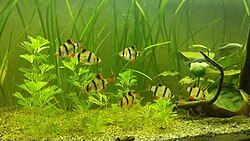
Rubbing behavior in Tiger Barbs is often a sign of stress or discomfort. This problem, while not typically fatal, requires prompt attention as it may lead to secondary infections. It's crucial for owners to first rule out environmental factors before considering health issues.
Tiger Barb Rubbing Against Objects: Common Causes
Poor Water Quality
Most LikelyAmmonia or nitrite levels above 0.1 ppm can cause stress.
Poor Water Parameters
Most LikelyInadequate pH or temperature can trigger stress responses.
Dietary Deficiencies
PossibleLack of essential nutrients can lead to skin irritation.
Fin Nipping
PossibleInadequate tank space or lack of school size can cause this behavior.
Parasites
Less CommonExternal parasites can cause skin irritation and rubbing behavior.
How to Diagnose the Cause
Follow these steps in order. Stop when you identify a likely cause and move to treatment.
- Check water parameters for ammonia, nitrite, nitrate, pH, and temperature.
Use a water test kit to measure these parameters.
Recommended: Water test kit - Inspect the fish for signs of external parasites.
Look for white specks, bumps, or flaking skin.
Recommended: Magnifying glass - Evaluate the diet for nutritional completeness.
Ensure a varied diet rich in vitamins and minerals.
Recommended: Dietary analysis - Assess the tank for adequate space and number of barbs.
Ensure the tank is large enough and there are at least 6 barbs for social support.
Recommended: Tank ruler - Monitor the behavior for changes after addressing potential causes.
Observe the fish over several days to see if the rubbing behavior decreases.
How to Treat Tiger Barb Rubbing Against Objects
- Improve water quality by carrying out regular water changes (25% every 1-2 weeks).
Use a water filter and ensure proper biological filtration.
- Adjust water parameters to optimal levels if necessary.
Use pH buffers and temperature regulators to maintain stable conditions.
- Reevaluate the diet and provide a well-balanced, varied diet.
Offer a mix of flake food, pellets, and live or frozen foods like bloodworms and brine shrimp.
- Ensure the tank is well-decorated and provides hiding spots to reduce stress.
Add plants, driftwood, and other decorations to mimic the natural habitat.
- Consider adding more barbs to the tank if space and water quality permit.
However, avoid overcrowding to maintain good water quality.
How to Prevent Tiger Barb Rubbing Against Objects
When to See a Vet
🔬 AI Symptom Checker
Not sure what's wrong? Describe your fish's symptoms to the FishCare AI and get an instant diagnosis.
Check Symptoms →Frequently Asked Questions
This guide was reviewed for biological accuracy and practical aquarium care guidance. Always test water parameters before treating a sick fish — poor water quality is the most common root cause. Consult an aquatic veterinarian if symptoms persist after 48 hours of correct treatment.
Sources: Merck Veterinary Manual — Aquarium Fishes · UF/IFAS Extension — Fish Health Management