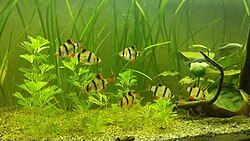
Jumping out of a tank is an emergency for Tiger Barbs, as it indicates stress or discomfort. It's crucial to address this promptly as it can lead to serious injury or even death. Owners should first assess the water parameters and tank environment to identify potential causes.
Tiger Barb Jumping Out of Tank: Common Causes
Poor Water Quality
Most LikelyHigh ammonia or nitrite levels can cause stress, prompting jumping.
Insufficient Oxygen
Most LikelyLow dissolved oxygen levels in water can lead to distress and surface jumping.
Overcrowding
PossibleNot enough space in the tank can cause aggression and stress.
Water Temperature Fluctuations
PossibleSudden temperature changes can stress the fish and cause it to jump.
Inadequate Diet
Less CommonLack of essential nutrients can weaken the fish and lead to increased stress.
How to Diagnose the Cause
Follow these steps in order. Stop when you identify a likely cause and move to treatment.
- Check water parameters for ammonia, nitrite, nitrate, pH, and temperature using a test kit.
Ensure all parameters are within the ideal range for Tiger Barbs.
Recommended: Water test kit - Inspect the tank for physical damage, excessive waste, or signs of aggression.
Look for any environmental stressors.
- Observe the fish's diet and ensure it is balanced with high-quality food.
Provide a varied diet to meet nutritional needs.
- Assess tank mates for compatibility and aggression levels.
Ensure the tank is well-populated with peaceful, compatible species.
- Evaluate the tank for adequate hiding spots and swimming space.
Ensure the tank provides a stress-free environment with areas to retreat.
How to Treat Tiger Barb Jumping Out of Tank
- Adjust water parameters to ideal levels by partial water changes and adding water treatments if necessary.
Gradually improve water quality and oxygen levels.
- Ensure the tank is well-aerated and has a consistent water flow to increase oxygenation.
Use an air stone or powerhead if needed.
- If overcrowding is an issue, consider removing some tank mates or increasing the tank size.
Provide ample space for swimming and reducing aggression.
- Maintain consistent water temperatures and avoid rapid changes.
Use a reliable heater to keep the water at the correct temperature.
- Improve the diet by offering a balanced, varied diet with high-quality flakes or pellets.
Ensure the fish is getting all necessary nutrients and vitamins.
How to Prevent Tiger Barb Jumping Out of Tank
When to See a Vet
🔬 AI Symptom Checker
Not sure what's wrong? Describe your fish's symptoms to the FishCare AI and get an instant diagnosis.
Check Symptoms →Frequently Asked Questions
This guide was reviewed for biological accuracy and practical aquarium care guidance. Always test water parameters before treating a sick fish — poor water quality is the most common root cause. Consult an aquatic veterinarian if symptoms persist after 48 hours of correct treatment.
Sources: Merck Veterinary Manual — Aquarium Fishes · UF/IFAS Extension — Fish Health Management