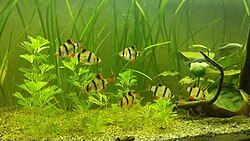
Floating at the surface in Tiger Barbs is a serious issue often indicating an underlying health concern. It can lead to drowning if not addressed promptly. Owners should first check the water parameters and aquarium conditions before seeking veterinary assistance.
Tiger Barb Floating at Surface: Common Causes
Poor Water Quality
Most LikelyHigh ammonia or nitrite levels can cause Tiger Barbs to float at the surface.
Constipation
PossibleOvereating or lack of dietary fiber can lead to constipation, causing the fish to float.
Disease
Most LikelyInfections like Ich or fin rot can make it difficult for the fish to swim normally.
Overcrowding
PossibleNot having enough space can stress the fish and lead to surface floating.
Physical Injury
Less CommonAn injury to the swim bladder can cause difficulty in maintaining buoyancy.
How to Diagnose the Cause
Follow these steps in order. Stop when you identify a likely cause and move to treatment.
- Test the water for ammonia, nitrite, and nitrate levels using a test kit.
These are indicators of water quality issues.
Recommended: Water test kit - Check the diet of the Tiger Barb and ensure it contains sufficient fiber.
This helps prevent constipation.
- Inspect the fish for any visible signs of injury or disease such as spots, fin damage, or clamped fins.
These can be symptoms of infections.
- Evaluate the tank size and number of fish to ensure adequate space and proper social dynamics.
This can reduce stress and prevent overcrowding.
- Consult a veterinary reference for Tiger Barbs to identify specific signs of common diseases.
This can help pinpoint the issue.
Recommended: Veterinary reference for Tiger Barbs
How to Treat Tiger Barb Floating at Surface
- Improve water quality by increasing water changes and addressing the source of contamination.
This is crucial for recovery.
- Adjust the diet to include more fiber or consult a vet for a laxative solution.
This helps in managing constipation.
- Administer appropriate medication for infections as advised by a vet.
Follow the vet's instructions closely.
- Ensure the Tiger Barb has adequate space and reduce stress through tank rearrangement if necessary.
This helps prevent further stress and health issues.
- If there is a physical injury, consult a vet for a treatment plan.
Physical injuries can be complex and require veterinary care.
How to Prevent Tiger Barb Floating at Surface
When to See a Vet
🔬 AI Symptom Checker
Not sure what's wrong? Describe your fish's symptoms to the FishCare AI and get an instant diagnosis.
Check Symptoms →Frequently Asked Questions
This guide was reviewed for biological accuracy and practical aquarium care guidance. Always test water parameters before treating a sick fish — poor water quality is the most common root cause. Consult an aquatic veterinarian if symptoms persist after 48 hours of correct treatment.
Sources: Merck Veterinary Manual — Aquarium Fishes · UF/IFAS Extension — Fish Health Management