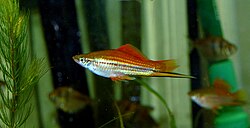
Sinking to the bottom in Green Swordtails is often a sign of serious health issues. It can indicate internal parasites, swim bladder disorders, or bacterial infections. Immediate attention is crucial as it can lead to death if not addressed promptly. Owners should first assess the water quality and diet, as these are common triggers.
Green Swordtail Sinking to Bottom: Common Causes
Internal Parasites
Most LikelyInfestations by parasites such as Gyrodactylus can cause internal damage, leading to sinking behavior.
Swim Bladder Disorder
Most LikelyA swim bladder issue may cause the fish to be unable to control its buoyancy, resulting in sinking.
Bacterial Infections
Most LikelyBacteria like Aeromonas can cause general weakness and sinking behavior in Swordtails.
Poor Water Quality
PossibleAmmonia, nitrite, or nitrate spikes can stress the fish and lead to sinking.
Dietary Issues
Less CommonAn unbalanced diet can lead to malnutrition, weakness, and sinking in Swordtails.
How to Diagnose the Cause
Follow these steps in order. Stop when you identify a likely cause and move to treatment.
- Observe the fish for other signs of illness, such as clamped fins or erratic swimming.
This can help determine the severity and urgency of the situation.
- Check the water parameters using a test kit, focusing on ammonia, nitrite, nitrate, pH, and temperature.
Improve water quality if any parameter is outside the recommended range for Green Swordtails.
Recommended: Water test kit - Inspect the fish for external parasites, such as ich or flukes, which may be visible to the naked eye.
This can help identify the presence of external parasites.
- Examine the fish's mouth and gills for signs of infection, such as ulcers or discoloration.
This can indicate bacterial or fungal infections.
- If symptoms persist, consider internal issues and consult a vet who can perform a more detailed examination.
Vet may recommend a physical examination or blood work.
How to Treat Green Swordtail Sinking to Bottom
- Perform a 25% water change to remove toxins and improve water quality.
- Add an antibacterial treatment to the water if a bacterial infection is suspected.
- Use a dechlorinator to neutralize chlorine and chloramine in tap water before water changes.
- Feed the fish a varied diet with high-quality flake food, pellets, and occasional live or frozen foods to ensure proper nutrition.
- Consider adding a swim bladder aid to the diet or treating with medication if a swim bladder disorder is diagnosed.
How to Prevent Green Swordtail Sinking to Bottom
When to See a Vet
🔬 AI Symptom Checker
Not sure what's wrong? Describe your fish's symptoms to the FishCare AI and get an instant diagnosis.
Check Symptoms →Frequently Asked Questions
This guide was reviewed for biological accuracy and practical aquarium care guidance. Always test water parameters before treating a sick fish — poor water quality is the most common root cause. Consult an aquatic veterinarian if symptoms persist after 48 hours of correct treatment.
Sources: Merck Veterinary Manual — Aquarium Fishes · UF/IFAS Extension — Fish Health Management