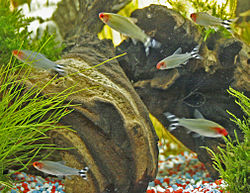
Swimming sideways in Rummy Nose Tetras is a serious issue often indicating a severe health problem. It can be caused by various factors, including bacterial infections, ammonia toxicity, and poor water quality. Immediate attention is crucial to prevent further complications and potential loss of the fish.
Rummy Nose Tetra Swimming Sideways: Common Causes
Bacterial Infection
Most LikelyCaused by poor water quality or stress, leading to secondary infections.
Ammonia Toxicity
Most LikelyHigh ammonia levels can cause severe stress and lead to swimming sideways.
Poor Water Quality
Most LikelyUnbalanced pH, high nitrite or nitrate levels, or low oxygen can contribute to this behavior.
Stress
PossibleStress from tank mates, overcrowding, or sudden changes in environment can trigger this behavior.
Parasites
Less CommonParasitic infections can cause swimming sideways as fish try to scratch affected areas.
How to Diagnose the Cause
Follow these steps in order. Stop when you identify a likely cause and move to treatment.
- Inspect the fish for external signs of injury or parasites.
Look for any visible wounds, spots, or parasites.
- Check the water parameters for ammonia, nitrite, nitrate, pH, and oxygen levels.
Use a water test kit to measure these parameters.
Recommended: Water test kit - Observe the fish's behavior and diet to identify any recent changes.
Note any changes in feeding habits or interactions with tank mates.
- Review the tank setup for potential stressors, such as overcrowding or aggressive tank mates.
Ensure the tank is well-maintained and suitable for the fish's needs.
- Consider the fish's age and overall health history to rule out chronic conditions.
Check for any previous health issues or signs of aging.
How to Treat Rummy Nose Tetra Swimming Sideways
- Perform a 25-30% water change to reduce ammonia and nitrite levels.
Use dechlorinated water and maintain the same temperature and pH as the tank water.
- Add an ammonia binder or use a water conditioner to neutralize ammonia and nitrite.
Follow the product instructions for dosage and frequency.
- If a bacterial infection is suspected, treat the tank with an appropriate antibiotic, following label instructions.
Ensure the antibiotic is safe for freshwater fish and compatible with the tank's water conditions.
- Consider adding a probiotic to the tank to support the fish's immune system.
Follow the product instructions for dosage and frequency.
- Provide a stress-free environment by reducing tank mates, minimizing handling, and ensuring adequate hiding spots.
Monitor the fish's behavior and adjust the tank setup as needed to reduce stress.
How to Prevent Rummy Nose Tetra Swimming Sideways
When to See a Vet
🔬 AI Symptom Checker
Not sure what's wrong? Describe your fish's symptoms to the FishCare AI and get an instant diagnosis.
Check Symptoms →Frequently Asked Questions
This guide was reviewed for biological accuracy and practical aquarium care guidance. Always test water parameters before treating a sick fish — poor water quality is the most common root cause. Consult an aquatic veterinarian if symptoms persist after 48 hours of correct treatment.
Sources: Merck Veterinary Manual — Aquarium Fishes · UF/IFAS Extension — Fish Health Management