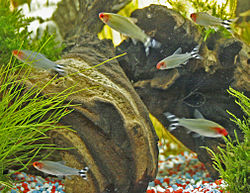
Sunken belly in Rummy Nose Tetras, characterized by a concave abdomen and emaciated appearance, is a serious condition often indicating internal health issues. It can be life-threatening if not addressed promptly. Owners should immediately adjust their aquarium maintenance and diet.
Rummy Nose Tetra Sunken Belly: Common Causes
Internal Parasites
Most LikelyInternal parasites like hexamita can cause bloating and loss of appetite, leading to sunken belly.
Poor Diet
PossibleInsufficient nutrients or an unbalanced diet can lead to malnutrition and sunken belly.
Bacterial Infection
PossibleInfections, such as those caused by Aeromonas, can lead to internal inflammation and sunken belly.
Fungal Infections
Less CommonFungal infections like Saprolegnia can affect internal tissues, causing sunken belly.
Genetic Disorders
Less CommonHereditary conditions may also result in sunken belly, particularly if there is a history of the disorder in the fish's lineage.
How to Diagnose the Cause
Follow these steps in order. Stop when you identify a likely cause and move to treatment.
- Observe the fish's swimming pattern and behavior for signs of stress or illness.
Look for changes in movement, feeding, and social behavior.
- Perform a physical examination by gently lifting the fish out of the water and checking for external signs of injury or parasites.
Inspect for any wounds, parasites, or abnormal growths.
- Use a magnifying glass to check for signs of internal bloating or swelling.
This can indicate internal health issues.
Recommended: magnifying glass - Take a water sample and test for ammonia, nitrite, and nitrate levels, as well as pH and temperature.
Poor water quality can contribute to health issues.
Recommended: water test kit - Consider a fecal float to check for internal parasites.
This can reveal parasites not visible during a physical examination.
Recommended: microscope and float test kit
How to Treat Rummy Nose Tetra Sunken Belly
- Adjust the water parameters to optimal levels for Rummy Nose Tetras, including pH, temperature, and ammonia, nitrite, and nitrate levels.
Maintain stable water conditions to support the fish's recovery.
- Implement a medicated treatment following the manufacturer's instructions. Metronidazole or other appropriate medications may be used.
Medications can target specific infections.
- Improve the diet by feeding high-quality, protein-rich foods specifically formulated for tetras.
Ensure the fish is getting the necessary nutrients for recovery.
- Consider the possibility of internal parasites and consult with a vet for a more specific diagnosis and treatment if necessary.
Vets can provide more advanced diagnostic tools and treatments.
- Regularly monitor the fish's progress and continue with the treatment until the symptoms resolve.
Patience and ongoing care are crucial for recovery.
How to Prevent Rummy Nose Tetra Sunken Belly
When to See a Vet
🔬 AI Symptom Checker
Not sure what's wrong? Describe your fish's symptoms to the FishCare AI and get an instant diagnosis.
Check Symptoms →Frequently Asked Questions
This guide was reviewed for biological accuracy and practical aquarium care guidance. Always test water parameters before treating a sick fish — poor water quality is the most common root cause. Consult an aquatic veterinarian if symptoms persist after 48 hours of correct treatment.
Sources: Merck Veterinary Manual — Aquarium Fishes · UF/IFAS Extension — Fish Health Management