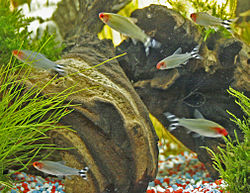
Spots on fins in Rummy Nose Tetras, often seen as velvet-like spots or discoloration, indicate a serious health issue. This condition can rapidly worsen and lead to fish stress or death. It is crucial to identify the cause and act swiftly to save your tetras.
Rummy Nose Tetra Spots on Fins: Common Causes
Poor Water Quality
Most LikelyHigh ammonia or nitrite levels can stress the fish, leading to fin spots.
External Parasites
PossibleIck or other parasites can cause spots as they burrow into the fin tissue.
Bacterial Infections
Most LikelyGram-negative bacteria can infect the fins, causing spots and discoloration.
Poor Diet
PossibleDeficiencies in nutrients, especially vitamins, can weaken the fish's immune system, making them susceptible to infections.
Water Temperature Fluctuations
Less CommonSudden temperature changes can stress the fish, leading to fin spots.
How to Diagnose the Cause
Follow these steps in order. Stop when you identify a likely cause and move to treatment.
- Observe the affected fish's behavior and appearance closely.
Note the extent and color of the spots, and any other signs of distress.
- Check the water parameters with an accurate test kit.
Ensure ammonia, nitrite, and nitrate levels are within safe ranges for Rummy Nose Tetras.
Recommended: Water test kit - Inspect the tank for signs of parasites or other stressors.
Look for other fish with similar symptoms or any visible parasites.
- Review the fish's diet and feeding routine.
Assess the nutritional balance and frequency of feeding.
- Consult with a vet specializing in aquarium fish if needed.
They can provide a more precise diagnosis and treatment plan.
How to Treat Rummy Nose Tetra Spots on Fins
- Improve water quality by increasing water changes and treating the tank with a water conditioner.
Remove chlorine and heavy metals that can stress the fish.
- Administer an appropriate medication, such as metronidazole or fenbendazole, to treat bacterial infections.
Follow the vet's instructions on dosage and duration.
- Remove any external parasites with an antiparasitic treatment.
Use treatments like malachite green or potassium permanganate, following the label instructions.
- Adjust the diet to ensure a balanced intake of vitamins and minerals.
Provide a varied diet that includes vitamin-enriched foods or supplements.
- Monitor the fish closely and repeat treatments as necessary.
Ensure the fish's stress levels are minimized throughout the healing process.
How to Prevent Rummy Nose Tetra Spots on Fins
When to See a Vet
🔬 AI Symptom Checker
Not sure what's wrong? Describe your fish's symptoms to the FishCare AI and get an instant diagnosis.
Check Symptoms →Frequently Asked Questions
This guide was reviewed for biological accuracy and practical aquarium care guidance. Always test water parameters before treating a sick fish — poor water quality is the most common root cause. Consult an aquatic veterinarian if symptoms persist after 48 hours of correct treatment.
Sources: Merck Veterinary Manual — Aquarium Fishes · UF/IFAS Extension — Fish Health Management