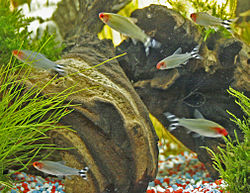
Red streaks on Rummy Nose Tetras are a sign of serious internal bleeding, often due to stress or poor water quality. Immediate action is crucial as the condition can worsen rapidly. Owners should first ensure the tank conditions are optimal and seek professional veterinary assistance if symptoms persist.
Rummy Nose Tetra Red Streaks on Body: Common Causes
Poor Water Quality
Most LikelyHigh levels of ammonia, nitrite, or nitrate can cause stress and internal bleeding.
Stressful Tank Conditions
Most LikelyOvercrowding, aggressive tankmates, or rapid temperature changes can lead to stress-related hemorrhages.
Poor Diet
PossibleInadequate nutrition or a lack of essential vitamins can weaken the fish's immune system, making it more susceptible to hemorrhages.
Parasitic Infections
PossibleExternal parasites can cause irritation and lead to secondary infections that may result in hemorrhaging.
Genetic Disorders
Less CommonIn some cases, genetic predispositions may contribute to the development of hemorrhagic conditions.
How to Diagnose the Cause
Follow these steps in order. Stop when you identify a likely cause and move to treatment.
- Inspect the fish for visible signs of stress or aggression.
Check for signs of tank mate aggression or stress due to poor water quality.
- Perform a water test to check for ammonia, nitrite, and nitrate levels.
Use a reliable water test kit to ensure the tank's chemical balance is within the optimal range for Rummy Nose Tetras.
Recommended: Water Test Kit - Observe the fish's diet and overall health.
Ensure the fish is receiving a balanced diet rich in vitamins and minerals.
- Conduct a physical examination for external parasites or signs of secondary infections.
Use a magnifying glass to inspect the fish's fins and body for parasites.
Recommended: Magnifying Glass - Review the fish's history and tank conditions.
Consider any recent changes in the tank setup or diet that may have contributed to the condition.
How to Treat Rummy Nose Tetra Red Streaks on Body
- Improve water quality by changing 50% of the tank water daily.
This helps remove harmful toxins and reduces stress on the fish.
- Administer a broad-spectrum antibiotic if a bacterial infection is suspected.
Consult a vet for the appropriate dosage and treatment protocol.
- Add an anti-stress treatment to the tank, such as salt or melatonin, to reduce stress levels.
Follow the manufacturer's instructions for use and duration.
- Ensure the fish is on a balanced diet rich in vitamins and minerals.
Feed high-quality flakes or pellets that are formulated for tetras.
- Consider isolating the affected fish to prevent the spread of infection to other tank inhabitants.
Keep the isolation tank's conditions identical to the main tank to minimize stress.
How to Prevent Rummy Nose Tetra Red Streaks on Body
When to See a Vet
🔬 AI Symptom Checker
Not sure what's wrong? Describe your fish's symptoms to the FishCare AI and get an instant diagnosis.
Check Symptoms →Frequently Asked Questions
This guide was reviewed for biological accuracy and practical aquarium care guidance. Always test water parameters before treating a sick fish — poor water quality is the most common root cause. Consult an aquatic veterinarian if symptoms persist after 48 hours of correct treatment.
Sources: Merck Veterinary Manual — Aquarium Fishes · UF/IFAS Extension — Fish Health Management