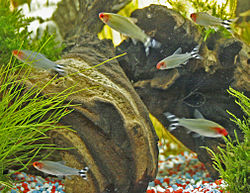
Losing color in Rummy Nose Tetras is often a sign of stress or illness, which can be serious if not addressed promptly. These fish are sensitive to water quality and temperature fluctuations, so careful monitoring is crucial. Owners should first check their aquarium conditions to rule out common stressors.
Rummy Nose Tetra Losing Color: Common Causes
Poor Water Quality
Most LikelyAmmonia, nitrite, and nitrate levels can be toxic to Rummy Nose Tetras, leading to color loss and stress.
Temperature Fluctuations
Most LikelyConsistent temperature is vital for these tetras; even slight deviations can cause stress and color loss.
Dietary Deficiencies
PossibleInadequate nutrition, particularly lack of color-enhancing foods, can lead to paleness in these fish.
Internal Parasites
PossibleParasitic infections can weaken Rummy Nose Tetras and cause color loss, requiring immediate veterinary attention.
Poor Diet
Less CommonFeeding poor-quality food or overfeeding can contribute to health issues and color loss.
How to Diagnose the Cause
Follow these steps in order. Stop when you identify a likely cause and move to treatment.
- Test the water parameters for ammonia, nitrite, nitrate, pH, and temperature.
Ensure the water quality is within the optimal range for Rummy Nose Tetras.
Recommended: Water test kit - Observe the fish's behavior and appearance for any signs of injury, parasites, or other abnormalities.
Look for any signs of stress or disease that might be causing the color loss.
- Review the diet to ensure it's balanced and includes color-enhancing foods.
Check for any dietary deficiencies that could be contributing to the color loss.
- Inspect the tank for any signs of aggression or bullying that could be causing stress.
Rummy Nose Tetras are sensitive and can be stressed by aggressive tankmates.
- Consider any recent changes in the aquarium environment or routine that might have caused stress.
Changes in water conditions, decorations, or tankmates can lead to stress and color loss.
How to Treat Rummy Nose Tetra Losing Color
- Improve water quality by carrying out regular water changes and using a water conditioner to remove toxins.
Keep ammonia, nitrite, and nitrate levels within safe limits.
- Stabilize water temperature and ensure it remains consistent within the optimal range of 24–26°C.
Temperature fluctuations can be extremely stressful to these fish.
- Adjust the diet to include high-quality food and color-enhancing supplements.
Feeding a varied and balanced diet is essential for maintaining their vibrant colors.
- Remove any aggressive tankmates or provide more hiding spots to reduce stress.
Stress from aggression can lead to color loss and health issues.
- Consult with a veterinarian if the fish shows signs of internal parasites or other serious health issues.
Immediate veterinary care is necessary for conditions that cannot be managed at home.
How to Prevent Rummy Nose Tetra Losing Color
When to See a Vet
🔬 AI Symptom Checker
Not sure what's wrong? Describe your fish's symptoms to the FishCare AI and get an instant diagnosis.
Check Symptoms →Frequently Asked Questions
This guide was reviewed for biological accuracy and practical aquarium care guidance. Always test water parameters before treating a sick fish — poor water quality is the most common root cause. Consult an aquatic veterinarian if symptoms persist after 48 hours of correct treatment.
Sources: Merck Veterinary Manual — Aquarium Fishes · UF/IFAS Extension — Fish Health Management