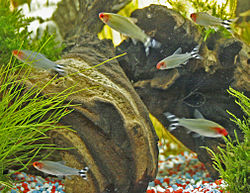
Lethargy in Rummy Nose Tetras often stems from stress or illness, which can be serious if not addressed promptly. Owners should first ensure water parameters are ideal for this sensitive species. Early signs of lethargy require monitoring to prevent escalation.
Rummy Nose Tetra Lethargic or Inactive: Common Causes
Poor Water Quality
Most LikelyAmmonia, nitrite, and nitrate levels can be toxic to these tetras.
Temperature Fluctuations
Most LikelyRapid changes in water temperature can stress the fish.
Poor Diet
PossibleA lack of variety or inadequate nutrition can lead to decreased activity.
Illness
PossibleBacterial or parasitic infections can cause lethargy.
Stress from Tank Mates
Less CommonAggressive tank mates can stress the sensitive Rummy Nose Tetra.
How to Diagnose the Cause
Follow these steps in order. Stop when you identify a likely cause and move to treatment.
- Check water parameters
Test for ammonia, nitrite, nitrate, pH, and temperature.
Recommended: Water test kit - Observe fish behavior
Look for signs of illness, such as spots or clamped fins.
- Inspect tank conditions
Check for aggression, overcrowding, or inadequate hiding spots.
- Review diet
Ensure a balanced and varied diet is being provided.
- Monitor for changes
Keep a daily log of the fish's behavior and any new developments.
How to Treat Rummy Nose Tetra Lethargic or Inactive
- Improve water quality
Perform water changes and adjust parameters to the recommended range.
- Isolate the fish
Move the lethargic tetra to a hospital tank if illness is suspected.
- Adjust diet
Feed high-quality, easily digestible foods and increase variety.
- Reduce stress
Ensure tank mates are compatible and provide adequate hiding spots.
- Consult a vet
Seek professional advice if the fish does not improve after these steps.
How to Prevent Rummy Nose Tetra Lethargic or Inactive
When to See a Vet
🔬 AI Symptom Checker
Not sure what's wrong? Describe your fish's symptoms to the FishCare AI and get an instant diagnosis.
Check Symptoms →Frequently Asked Questions
This guide was reviewed for biological accuracy and practical aquarium care guidance. Always test water parameters before treating a sick fish — poor water quality is the most common root cause. Consult an aquatic veterinarian if symptoms persist after 48 hours of correct treatment.
Sources: Merck Veterinary Manual — Aquarium Fishes · UF/IFAS Extension — Fish Health Management