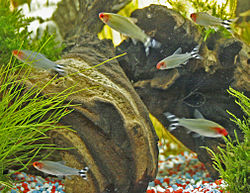
Bulging eyes, or Popeye, in Rummy Nose Tetras is a serious condition often indicating an underlying health issue. It can lead to blindness and death if not treated promptly. Owners should first understand that this is an urgent matter requiring immediate attention.
Rummy Nose Tetra Bulging Eyes (Popeye): Common Causes
Poor Water Quality
Most LikelyHigh ammonia or nitrite levels can cause Popeye in Rummy Nose Tetras.
Poor Diet
PossibleA lack of proper nutrition, especially vitamin C deficiency, can lead to Popeye.
Bacterial Infection
Most LikelyGram-negative bacteria can infect the eyes, causing them to bulge.
Parasitic Infection
PossibleProtists like ichthyophthirius can cause Popeye in Rummy Nose Tetras.
Physical Trauma
Less CommonPhysical injury to the eyes can cause Popeye, though this is less common.
How to Diagnose the Cause
Follow these steps in order. Stop when you identify a likely cause and move to treatment.
- Inspect the fish for other signs of illness such as loss of appetite, clamped fins, or abnormal swimming patterns.
This can help identify if the Popeye is due to an underlying condition.
- Check the water parameters for ammonia, nitrite, and nitrate levels using a test kit.
High ammonia or nitrite levels can indicate water quality issues.
Recommended: Water test kit - Observe the fish's diet and ensure it is receiving a balanced diet rich in vitamin C.
A deficiency in vitamin C can lead to Popeye.
- Perform a visual inspection for signs of injury or parasites.
Physical trauma or parasitic infections can be the cause of Popeye.
- Consult with a veterinarian specializing in fish health for a definitive diagnosis and treatment plan.
A vet can provide more advanced diagnostic tools and treatment options.
How to Treat Rummy Nose Tetra Bulging Eyes (Popeye)
- Improve water quality by increasing water changes and using a water conditioner to remove harmful substances.
This is crucial for the fish's recovery.
- Adjust the diet to include foods rich in vitamin C, such as vitamin C fortified foods or fresh vegetables.
Vitamin C supplementation can help combat the deficiency.
- Administer antibiotics if a bacterial infection is diagnosed, following the vet's instructions.
Antibiotics are necessary to treat bacterial infections.
- Use an anti-parasitic treatment if a parasitic infection is identified, as directed by a veterinarian.
Parasitic infections require specific treatments.
- Ensure the fish is in a stress-free environment with adequate hiding spots and tank mates that do not harass it.
Stress can exacerbate the condition and hinder recovery.
How to Prevent Rummy Nose Tetra Bulging Eyes (Popeye)
When to See a Vet
🔬 AI Symptom Checker
Not sure what's wrong? Describe your fish's symptoms to the FishCare AI and get an instant diagnosis.
Check Symptoms →Frequently Asked Questions
This guide was reviewed for biological accuracy and practical aquarium care guidance. Always test water parameters before treating a sick fish — poor water quality is the most common root cause. Consult an aquatic veterinarian if symptoms persist after 48 hours of correct treatment.
Sources: Merck Veterinary Manual — Aquarium Fishes · UF/IFAS Extension — Fish Health Management