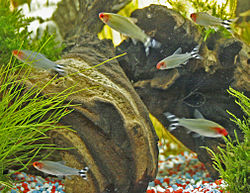
Black spots on Rummy Nose Tetras are often indicative of stress, poor water quality, or a bacterial infection. These spots can be unsightly but may not be immediately life-threatening. However, timely action is crucial to prevent the spread of the infection. Owners should be vigilant about their tank conditions and diet.
Rummy Nose Tetra Black Spots: Common Causes
Poor Water Quality
Most LikelyAmmonia, nitrite, or nitrate levels can rise due to inadequate filtration, overfeeding, or decaying organic matter.
Bacterial Infection
PossibleBacterial infections, such as Aeromonas or Pseudomonas, can cause these spots.
Stress
PossibleStress can be caused by overcrowding, aggressive tankmates, or rapid water changes.
Dietary Issues
Less CommonInadequate nutrition or diet can lead to weakened immune systems and spots.
Water Temperature Fluctuations
Less CommonFluctuations outside the optimal range can stress the fish and lead to spots.
How to Diagnose the Cause
Follow these steps in order. Stop when you identify a likely cause and move to treatment.
- Observe the fish for other symptoms such as fin damage or clamped fins.
These can indicate a more severe problem.
- Test the water for ammonia, nitrite, and nitrate levels.
Use a reliable test kit to check the water quality.
Recommended: Water test kit - Check the water parameters, including pH and temperature, to ensure they meet the optimal range for Rummy Nose Tetras.
This can help identify if the problem is stress-related.
Recommended: Water testing parameters chart - Assess the tank conditions, such as overcrowding or aggression, that might contribute to stress.
Look for signs of stress such as hiding or restlessness.
- Consider recent changes to the tank or diet that could have caused stress or impacted health.
Dietary changes should be gradual and appropriate for the species.
How to Treat Rummy Nose Tetra Black Spots
- Perform daily water changes of 20-30% to remove toxins and maintain good water quality.
This helps reduce stress and promotes healing.
- Treat the tank with a broad-spectrum antibiotic if a bacterial infection is confirmed.
Follow the treatment instructions carefully and be aware of any side effects.
- Reduce the feeding frequency or switch to a high-quality, well-balanced diet to support immune system function.
Ensure the diet includes a variety of nutrients to aid recovery.
- Ensure that the tank temperature and pH remain stable within the optimal range for Rummy Nose Tetras.
This minimizes stress and promotes healing.
- If stress is due to tank conditions, make necessary adjustments to reduce aggression or overcrowding.
This can help improve the overall health of the fish and prevent recurrence of spots.
How to Prevent Rummy Nose Tetra Black Spots
When to See a Vet
🔬 AI Symptom Checker
Not sure what's wrong? Describe your fish's symptoms to the FishCare AI and get an instant diagnosis.
Check Symptoms →Frequently Asked Questions
This guide was reviewed for biological accuracy and practical aquarium care guidance. Always test water parameters before treating a sick fish — poor water quality is the most common root cause. Consult an aquatic veterinarian if symptoms persist after 48 hours of correct treatment.
Sources: Merck Veterinary Manual — Aquarium Fishes · UF/IFAS Extension — Fish Health Management