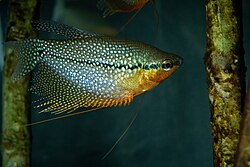
Rubbing against objects in Pearl Gourami is a common behavioral issue that may indicate stress, injury, or poor water quality. This problem can be serious if not addressed promptly, as it can lead to secondary infections. Owners should first rule out environmental issues before considering health problems.
Pearl Gourami Rubbing Against Objects: Common Causes
Poor Water Quality
Most LikelyAmmonia, nitrite, and nitrate levels exceeding safe limits can cause stress and lead to rubbing.
Inadequate Tank Size
Most LikelyA tank that is too small can lead to stress and aggression, causing the fish to rub against objects.
Water Temperature Fluctuations
PossibleFluctuations in water temperature can stress the fish, prompting them to rub against objects.
Poor Diet
PossibleA diet lacking in variety or essential nutrients can cause health issues that lead to rubbing.
Disease
Less CommonInfections or parasites can cause discomfort, leading the fish to rub against objects to relieve itching.
How to Diagnose the Cause
Follow these steps in order. Stop when you identify a likely cause and move to treatment.
- Check the water parameters for ammonia, nitrite, and nitrate levels.
Use a reliable test kit.
Recommended: Water test kit - Inspect the tank for any signs of aggression or bullying.
Observe the behavior of other fish in the tank.
- Evaluate the tank size and ensure it is appropriate for the number of fish.
Ensure the tank has enough space for the Pearl Gourami to swim freely.
- Assess the water temperature and confirm it is within the recommended range.
Use a reliable thermometer.
Recommended: Thermometer - Observe the fish's diet and ensure it is balanced and varied.
Provide a mix of flake food, pellets, and live or frozen foods.
How to Treat Pearl Gourami Rubbing Against Objects
- Improve water quality by performing regular water changes and maintaining appropriate ammonia, nitrite, and nitrate levels.
Change 20-30% of the water every week.
- Increase the tank size if necessary, to provide more space for the fish to swim and reduce stress.
Ensure the new tank meets the same temperature and pH requirements as the original tank.
- Stabilize water temperature and avoid rapid changes.
Use a reliable aquarium heater and thermometer.
- Adjust the diet to ensure it is nutritionally balanced and varied.
Include high-quality flake food, pellets, and live or frozen foods like brine shrimp and daphnia.
- If a disease is suspected, consult a veterinarian for appropriate treatment.
Follow the vet's instructions for medication and tank maintenance.
How to Prevent Pearl Gourami Rubbing Against Objects
When to See a Vet
🔬 AI Symptom Checker
Not sure what's wrong? Describe your fish's symptoms to the FishCare AI and get an instant diagnosis.
Check Symptoms →Frequently Asked Questions
This guide was reviewed for biological accuracy and practical aquarium care guidance. Always test water parameters before treating a sick fish — poor water quality is the most common root cause. Consult an aquatic veterinarian if symptoms persist after 48 hours of correct treatment.
Sources: Merck Veterinary Manual — Aquarium Fishes · UF/IFAS Extension — Fish Health Management