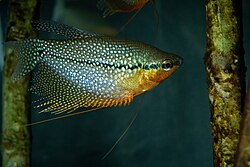
Black spots on a Pearl Gourami are often indicative of stress, poor water quality, or parasitic infections. This condition is not usually life-threatening but requires prompt attention to prevent complications. As a beginner-friendly species, early diagnosis and care are crucial to maintain the health of your gourami.
Pearl Gourami Black Spots: Common Causes
Poor Water Quality
Most LikelyAmmonia and nitrite levels exceeding safe thresholds can cause stress and lead to black spots.
Parasites
PossibleIck or other external parasites can cause black spots to appear on the body and fins.
Poor Diet
PossibleInadequate nutrition or feeding the wrong types of food can weaken the immune system and lead to black spots.
Stress
PossibleEnvironmental stressors like changes in water parameters or tank conditions can trigger stress responses, including the development of black spots.
Bacterial Infections
Less CommonAlthough less common, bacterial infections can cause black spots and require immediate veterinary attention.
How to Diagnose the Cause
Follow these steps in order. Stop when you identify a likely cause and move to treatment.
- Examine the gourami's appearance closely
Look for black spots on the body, fins, or skin.
- Check the water parameters
Ensure ammonia, nitrite, and nitrate levels are within the safe range for Pearl Gourami.
Recommended: pH test kit, nitrate test kit, ammonia test kit - Observe behavior
Stressed fish may show signs of aggression or changes in feeding patterns.
- Inspect for parasites
Use a magnifying glass to look for any signs of parasites like white spots or raised scales.
Recommended: magnifying glass - Evaluate the diet
Ensure the gourami is being fed a balanced diet rich in nutrients.
How to Treat Pearl Gourami Black Spots
- Improve water quality
Change 20-30% of the tank water daily to remove toxins. Maintain water parameters at 24-28°C and pH 6.5-8.5.
- Use anti-parasitic treatment
Consult a vet for the appropriate treatment, such as a formalin dip or fenbendazole.
- Adjust the diet
Feeding a high-quality diet rich in omega-3 fatty acids and vitamins can strengthen the immune system.
- Reduce stress
Provide adequate hiding spots and avoid sudden changes in tank conditions or aggression from tank mates.
- Monitor for improvement
Continue the treatment until the black spots disappear and the fish appears healthy and active again.
How to Prevent Pearl Gourami Black Spots
When to See a Vet
🔬 AI Symptom Checker
Not sure what's wrong? Describe your fish's symptoms to the FishCare AI and get an instant diagnosis.
Check Symptoms →Frequently Asked Questions
This guide was reviewed for biological accuracy and practical aquarium care guidance. Always test water parameters before treating a sick fish — poor water quality is the most common root cause. Consult an aquatic veterinarian if symptoms persist after 48 hours of correct treatment.
Sources: Merck Veterinary Manual — Aquarium Fishes · UF/IFAS Extension — Fish Health Management