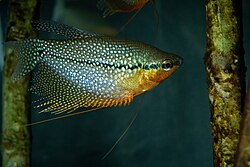
Sudden aggression in Pearl Gourami can be distressing but often stems from stress, overcrowding, or territorial disputes. This behavior is usually not serious but requires immediate attention to prevent long-term stress or injury. Owners should first ensure the tank environment is optimal and consider the fish's social dynamics.
Pearl Gourami Aggressive: Common Causes
Stress
Most LikelyHigh stress levels can cause aggression, often due to poor water quality, temperature fluctuations, or overcrowding.
Sexual Maturity
PossibleAs Pearl Gourami mature, they may become more territorial and aggressive, especially during breeding season.
Territorial Disputes
Most LikelyMale Gourami can be particularly aggressive over territory, leading to attacks on tank mates.
Dietary Issues
PossibleAn unbalanced diet or lack of variety can lead to aggression as the fish seeks out food.
Illness
Less CommonUnderlying health issues can manifest as aggression, so a thorough examination is crucial.
How to Diagnose the Cause
Follow these steps in order. Stop when you identify a likely cause and move to treatment.
- Check water parameters for ammonia, nitrite, and nitrate levels.
Ensure the water quality is within the optimal range for Pearl Gourami.
Recommended: pH test kit, ammonia test kit, nitrite test kit, nitrate test kit - Monitor the tank's temperature and ensure it is stable within the recommended range.
Temperature fluctuations can cause stress and aggression.
Recommended: Thermometer - Observe the tank for signs of overcrowding or aggression between tank mates.
Adjust the tank size or rehome aggressive individuals if necessary.
- Assess the fish's diet and consider adding more variety to its meals.
Ensure the diet is balanced and meets the nutritional needs of the Pearl Gourami.
- Look for physical signs of illness, such as ulcers or discoloration.
If any signs of illness are present, consult a veterinarian immediately.
How to Treat Pearl Gourami Aggressive
- Improve water quality by performing regular water changes and maintaining optimal pH and temperature levels.
This will reduce stress and help the fish calm down.
- Separate aggressive individuals from the tank if necessary, to prevent further aggression and injury.
This can help break the cycle of aggression.
- Adjust the diet to include a variety of foods such as live, frozen, and freeze-dried foods to meet nutritional needs and reduce aggression.
A balanced diet can improve overall health and reduce stress-related aggression.
- If aggression is due to sexual maturity, consider separating males and females or introducing a male-female ratio that promotes peace.
This can help reduce territorial disputes and aggression.
- If an underlying health issue is suspected, consult a veterinarian for a proper diagnosis and treatment.
Early intervention is key to recovery and reducing aggression caused by illness.
How to Prevent Pearl Gourami Aggressive
When to See a Vet
🔬 AI Symptom Checker
Not sure what's wrong? Describe your fish's symptoms to the FishCare AI and get an instant diagnosis.
Check Symptoms →Frequently Asked Questions
This guide was reviewed for biological accuracy and practical aquarium care guidance. Always test water parameters before treating a sick fish — poor water quality is the most common root cause. Consult an aquatic veterinarian if symptoms persist after 48 hours of correct treatment.
Sources: Merck Veterinary Manual — Aquarium Fishes · UF/IFAS Extension — Fish Health Management