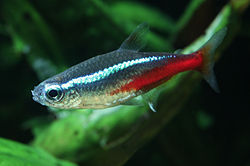
Bulging eyes, known as Popeye, in Neon Tetras is a serious condition indicating an underlying health issue. It can lead to blindness and is often fatal if not treated promptly. Owners should be aware that this condition can be caused by various factors, including poor water quality, nutritional deficiencies, and infections.
Neon Tetra Bulging Eyes (Popeye): Common Causes
Poor Water Quality
Most LikelyHigh ammonia or nitrite levels can cause Popeye in Neon Tetras.
Infections
Most LikelyBacterial infections, such as Columnaris, can lead to Popeye.
Nutritional Deficiencies
PossibleLack of essential nutrients, particularly vitamin C, can cause Popeye.
Physical Trauma
Less CommonAccidents or fights can result in Popeye, although less common.
Genetic Factors
Less CommonIn some cases, Popeye may be due to genetic predisposition.
How to Diagnose the Cause
Follow these steps in order. Stop when you identify a likely cause and move to treatment.
- Observe the fish's behavior and appearance.
Check for other signs of illness such as fin rot, bloating, or lethargy.
- Test the water parameters.
Measure ammonia, nitrite, nitrate, pH, and temperature levels.
Recommended: Water test kit - Inspect the fish for external signs of infection.
Look for spots, ulcers, or other abnormalities on the body.
- Analyze the fish's diet.
Ensure it is receiving a balanced diet rich in vitamin C.
- Consider the fish's environment.
Ensure the tank is spacious, well-aerated, and free of aggressive tankmates.
How to Treat Neon Tetra Bulging Eyes (Popeye)
- Improve water quality.
Perform water changes to reduce ammonia and nitrite levels. Use a water conditioner to neutralize chlorine and chloramine.
- Treat for infections.
Administer an appropriate antibiotic or antiseptic as directed by a veterinarian.
- Adjust the diet.
Feed a vitamin C supplement or provide foods naturally rich in vitamin C, such as spirulina or brine shrimp.
- Provide a stress-free environment.
Ensure the tank is well-maintained and free of aggressive tankmates or overcrowding.
- Monitor the fish's progress.
Keep a close eye on the fish's recovery and continue treatment as needed.
How to Prevent Neon Tetra Bulging Eyes (Popeye)
When to See a Vet
🔬 AI Symptom Checker
Not sure what's wrong? Describe your fish's symptoms to the FishCare AI and get an instant diagnosis.
Check Symptoms →Frequently Asked Questions
This guide was reviewed for biological accuracy and practical aquarium care guidance. Always test water parameters before treating a sick fish — poor water quality is the most common root cause. Consult an aquatic veterinarian if symptoms persist after 48 hours of correct treatment.
Sources: Merck Veterinary Manual — Aquarium Fishes · UF/IFAS Extension — Fish Health Management