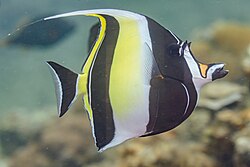
Red streaks on a Moorish Idol, Zanclus cornutus, are a sign of a serious internal hemorrhage, often due to stress or injury. Immediate action is crucial as it can lead to rapid deterioration. Owners should understand that this condition requires advanced aquarium maintenance and veterinary care.
Moorish Idol Red Streaks on Body: Common Causes
Stress
Most LikelyHigh stress levels can lead to internal bleeding, especially in sensitive species like the Moorish Idol.
Poor Water Quality
Most LikelyToxic levels of ammonia or nitrite can cause hemorrhaging in Moorish Idols, especially if the water parameters are not consistently maintained within the ideal range.
Physical Injury
Most LikelyFights with tankmates or collisions with hard tank surfaces can result in internal bleeding, which manifests as red streaks on the body.
Parasitic Infections
PossibleCertain parasites can cause internal bleeding and skin irritation in Moorish Idols, though this is less common than other causes.
Disease
Less CommonInternal diseases such as septicemia can lead to hemorrhaging and red streaks, although this is a less likely cause than the others listed.
How to Diagnose the Cause
Follow these steps in order. Stop when you identify a likely cause and move to treatment.
- Perform a visual inspection of the fish for signs of injury or aggression.
Look for any signs of physical damage to the fins or body.
- Check the water quality parameters, including ammonia, nitrite, and nitrate levels.
Use a reliable test kit to measure these parameters.
Recommended: Water quality test kit - Observe the fish's behavior and diet to identify any recent changes that may have caused stress.
Ensure that the diet is appropriate and that the tank environment is stress-free.
- Examine the fish under a magnifying glass for any signs of parasites.
Parasites may not be visible to the naked eye and may require a closer inspection.
Recommended: Magnifying glass - Consult with a veterinary professional for a definitive diagnosis and treatment plan.
A vet can conduct more advanced tests and provide specialized care.
How to Treat Moorish Idol Red Streaks on Body
- Improve water quality by performing regular water changes and ensuring optimal water parameters.
Target a consistent pH of 8.1–8.4 and temperature of 23–26°C.
- Remove any aggressive tankmates or adjust the tank layout to reduce stress.
Ensure that the Moorish Idol has adequate swimming space and territories.
- Administer antibiotics or antiparasitic treatments as recommended by a vet if an infection is detected.
Follow the vet's instructions precisely.
- Support the fish's immune system with a balanced diet and supplements if necessary.
Feed high-quality foods rich in vitamins and minerals.
- Monitor the fish's progress closely and continue treatment until the red streaks disappear and the fish's condition improves.
Regular check-ups are essential to ensure the fish is recovering properly.
How to Prevent Moorish Idol Red Streaks on Body
When to See a Vet
🔬 AI Symptom Checker
Not sure what's wrong? Describe your fish's symptoms to the FishCare AI and get an instant diagnosis.
Check Symptoms →Frequently Asked Questions
This guide was reviewed for biological accuracy and practical aquarium care guidance. Always test water parameters before treating a sick fish — poor water quality is the most common root cause. Consult an aquatic veterinarian if symptoms persist after 48 hours of correct treatment.
Sources: Merck Veterinary Manual — Aquarium Fishes · UF/IFAS Extension — Fish Health Management