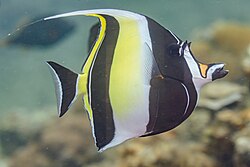
Not eating in Moorish Idols is often a critical sign, as they are highly selective feeders and can become stressed easily. It's serious because it can lead to malnutrition and health issues. Owners should first consider environmental stressors and dietary issues before seeking veterinary assistance.
Moorish Idol Not Eating: Common Causes
Stress
Most LikelyEnvironmental stress from tank mates, water quality issues, or sudden changes can cause Moorish Idols to stop eating.
Dietary Issues
Most LikelyOverfeeding or a poor diet lacking in variety can lead to disinterest in food.
Illness
PossibleUnderlying health problems like internal parasites or infections can suppress appetite.
Sexual Disruption
PossibleMales may stop eating during spawning periods due to increased energy demands for reproduction.
Age or Health
Less CommonOlder fish or those with long-term health issues may have decreased appetites.
How to Diagnose the Cause
Follow these steps in order. Stop when you identify a likely cause and move to treatment.
- Check the tank environment for signs of stress, such as aggression or hiding.
Observe tank mates and water conditions.
- Monitor water quality parameters including ammonia, nitrite, nitrate, pH, and temperature.
Use a reliable test kit.
Recommended: Water test kit - Inspect the fish for signs of illness, such as discoloration, fin damage, or bloating.
Perform a visual check.
- Review the diet to ensure it is varied and includes high-quality foods like mysis, brine shrimp, and seaweed.
Consider offering live or frozen food options.
- Consider the fish's age and overall health history.
This can provide clues to potential underlying issues.
How to Treat Moorish Idol Not Eating
- Address any environmental stressors, such as rearranging the tank or reducing aggression among tank mates.
- Improve water quality by performing regular water changes and addressing any imbalances.
- Treat any identified health issues with appropriate medication as recommended by a veterinarian.
- Adjust the diet to include a variety of high-quality foods and consider using a feeding schedule to stimulate appetite.
- If the fish is an older or chronically ill individual, consult with a vet for specific care recommendations.
How to Prevent Moorish Idol Not Eating
When to See a Vet
🔬 AI Symptom Checker
Not sure what's wrong? Describe your fish's symptoms to the FishCare AI and get an instant diagnosis.
Check Symptoms →Frequently Asked Questions
This guide was reviewed for biological accuracy and practical aquarium care guidance. Always test water parameters before treating a sick fish — poor water quality is the most common root cause. Consult an aquatic veterinarian if symptoms persist after 48 hours of correct treatment.
Sources: Merck Veterinary Manual — Aquarium Fishes · UF/IFAS Extension — Fish Health Management