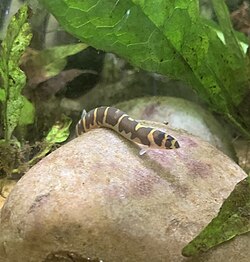
Clamped fins in Kuhli Loaches often indicate stress or poor water conditions. This issue is usually not life-threatening but can lead to secondary infections if not addressed promptly. It's crucial to first assess the overall tank environment, as Kuhli Loaches are sensitive to changes in water parameters and tank conditions.
Kuhli Loach Clamped Fins: Common Causes
Poor Water Quality
Most LikelyHigh ammonia or nitrite levels can stress Kuhli Loaches, causing them to clamp their fins.
Inadequate Tank Size
Most LikelyKuhli Loaches need space to swim and hide, and overcrowding can lead to stress and clamped fins.
Feeding Issues
PossibleOverfeeding or feeding the wrong type of food can cause bloating and stress, leading to clamped fins.
Water Temperature Fluctuations
PossibleExtreme temperature changes can cause stress and result in clamped fins.
Tank Mates
Less CommonAggressive tank mates or bullying can stress out Kuhli Loaches, leading to them clamping their fins.
How to Diagnose the Cause
Follow these steps in order. Stop when you identify a likely cause and move to treatment.
- Inspect the tank water quality
Check for ammonia, nitrite, nitrate, pH, and temperature levels. Use a water testing kit.
Recommended: Water testing kit - Observe the behavior of the Kuhli Loach
Look for signs of stress such as hiding, loss of appetite, or aggression towards tank mates.
- Assess the tank environment
Ensure there are enough hiding spots and that the tank is well-decorated to provide a stress-free environment.
- Evaluate the diet
Ensure the diet is appropriate and that the Kuhli Loach is not being overfed.
- Consider tank mates
Review the compatibility of your tank mates and consider rearranging them if necessary.
How to Treat Kuhli Loach Clamped Fins
- Improve water quality
Perform partial water changes (25-30% weekly) to lower ammonia and nitrite levels. Adjust pH and temperature if needed.
- Reduce stress
Ensure the tank is well-decorated with adequate hiding spots and reduce tank mates if aggression is an issue.
- Adjust diet
Feed a balanced diet of small pellets or live foods, ensuring not to overfeed the Kuhli Loach.
- Monitor for improvement
Continue to monitor the fish's behavior and overall health. Repeat water changes as necessary.
- Consult a vet
If the condition persists or worsens, consult an aquarium veterinarian for a professional diagnosis and treatment.
How to Prevent Kuhli Loach Clamped Fins
When to See a Vet
🔬 AI Symptom Checker
Not sure what's wrong? Describe your fish's symptoms to the FishCare AI and get an instant diagnosis.
Check Symptoms →Frequently Asked Questions
This guide was reviewed for biological accuracy and practical aquarium care guidance. Always test water parameters before treating a sick fish — poor water quality is the most common root cause. Consult an aquatic veterinarian if symptoms persist after 48 hours of correct treatment.
Sources: Merck Veterinary Manual — Aquarium Fishes · UF/IFAS Extension — Fish Health Management