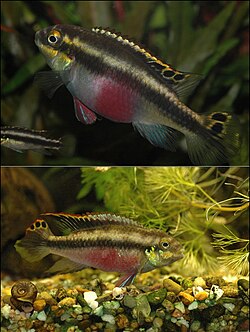
Ich in Kribensis is a serious condition caused by the parasites Ichthyophthirius multifiliis. It's highly contagious and can lead to death if not treated promptly. Owners must act quickly, isolating affected fish and adjusting the tank conditions accordingly.
Kribensis White Spots (Ich): Common Causes
Poor Water Quality
Most LikelyAmmonia, nitrite, and nitrate levels exceeding 0.25 ppm can stress Kribensis and make them more susceptible to Ich.
New Tank Syndrome
Most LikelyIch often occurs in new tanks due to high levels of ammonia and nitrites from decomposing fish waste.
Overcrowding
Most LikelyCrowded tanks with Kribensis can lead to increased stress and the spread of Ich.
Inadequate Water Changes
PossibleRegular water changes are crucial for maintaining healthy water parameters and preventing Ich outbreaks.
Introduction of Infected Fish
Less CommonIntroducing infected fish into the tank can quickly spread Ich to the entire community.
How to Diagnose the Cause
Follow these steps in order. Stop when you identify a likely cause and move to treatment.
- Inspect the fish for small, white spots that may be moving across the body and fins.
Observe the fish in a well-lit area to spot the characteristic white spots.
- Examine the fish for clamped fins, loss of appetite, and gasping at the surface.
These symptoms often accompany Ich infection.
- Check the water parameters for ammonia, nitrite, and nitrate levels.
These parameters should be within the recommended range for Kribensis.
Recommended: pH test kit - Look for Ichthyophthirius multifiliis under a microscope if possible.
Microscopic examination confirms the presence of the parasites.
Recommended: microscope - Rule out other diseases or stress factors.
Ich can be confused with other conditions, so a thorough examination is necessary.
How to Treat Kribensis White Spots (Ich)
- Isolate the affected fish in a separate tank with similar water parameters.
This prevents the spread of Ich to other fish.
- Perform daily 50% water changes in the main tank to reduce stress and remove Ich stages from the water.
Use dechlorinated water and maintain water quality.
- Use an ichthyophthirius-specific treatment like formalin or malachite green, following the manufacturer's instructions.
Ensure the treatment is safe for Kribensis and compatible with the tank conditions.
- Maintain the recommended temperature and pH range for Kribensis during treatment.
These parameters help the fish to cope with the stress of treatment.
- After treatment, monitor the fish closely for signs of recovery and perform additional water changes as needed.
It may take several weeks for the fish to fully recover.
How to Prevent Kribensis White Spots (Ich)
When to See a Vet
🔬 AI Symptom Checker
Not sure what's wrong? Describe your fish's symptoms to the FishCare AI and get an instant diagnosis.
Check Symptoms →Frequently Asked Questions
This guide was reviewed for biological accuracy and practical aquarium care guidance. Always test water parameters before treating a sick fish — poor water quality is the most common root cause. Consult an aquatic veterinarian if symptoms persist after 48 hours of correct treatment.
Sources: Merck Veterinary Manual — Aquarium Fishes · UF/IFAS Extension — Fish Health Management