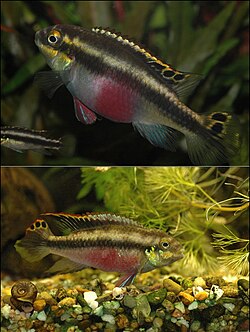
Torn or ragged fins in Kribensis, often due to stress or aggression, can be a sign of serious health issues. It's crucial to identify the cause promptly to prevent further stress. As a beginner-friendly species, Kribensis can be sensitive to changes in water quality and tank conditions.
Kribensis Torn Fins: Common Causes
Aggressive Tank Mates
Most LikelyCompetitive behavior can lead to fin-nipping among Kribensis pairs or groups.
Poor Water Quality
Most LikelyAmmonia, nitrite, and nitrate levels above recommended can stress the fish and damage fins.
Inadequate Diet
PossibleInsufficient nutrients or a lack of variety can weaken the fins and make them more susceptible to damage.
Disease
PossibleFin rot or other infections can cause fins to become shredded and ragged.
Water Temperature Fluctuations
Less CommonSudden changes in water temperature can stress the fish and lead to fin damage.
How to Diagnose the Cause
Follow these steps in order. Stop when you identify a likely cause and move to treatment.
- Inspect the tank for signs of aggression or bullying.
Observe if there are signs of aggression between Kribensis or other fish.
- Check water parameters with a test kit for ammonia, nitrite, and nitrate levels.
Ensure water quality is within the recommended range for Kribensis.
Recommended: Water test kit - Assess the diet and ensure it includes a variety of foods.
Kribensis require a balanced diet with both protein and plant matter.
- Look for any visible signs of disease, such as cloudy eyes or spots on the body.
Early detection of disease can prevent the spread and worsening of fin damage.
- Monitor water temperature to ensure it remains consistent.
Kribensis are sensitive to temperature changes, which can stress them and damage their fins.
Recommended: Thermometer
How to Treat Kribensis Torn Fins
- Remove aggressive tank mates or provide more space if necessary.
Reduce stress by managing aggression in the tank.
- Perform water changes to improve water quality and remove toxins.
Change 25-30% of the water weekly to maintain optimal conditions.
- Adjust the diet to include more varied and nutritious foods.
Provide a balanced diet with a mix of pellets, live foods, and vegetables.
- Administer appropriate medication if a bacterial infection is suspected.
Follow the vet's instructions for treatment, such as using anti-bacterial or anti-fungal treatments.
- Keep the tank temperature stable and within the recommended range.
Use an aquarium heater to maintain consistent water temperature.
How to Prevent Kribensis Torn Fins
When to See a Vet
🔬 AI Symptom Checker
Not sure what's wrong? Describe your fish's symptoms to the FishCare AI and get an instant diagnosis.
Check Symptoms →Frequently Asked Questions
This guide was reviewed for biological accuracy and practical aquarium care guidance. Always test water parameters before treating a sick fish — poor water quality is the most common root cause. Consult an aquatic veterinarian if symptoms persist after 48 hours of correct treatment.
Sources: Merck Veterinary Manual — Aquarium Fishes · UF/IFAS Extension — Fish Health Management