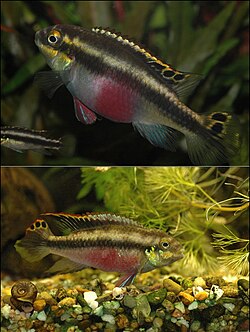
Spots on fins in Kribensis (Pelvicachromis pulcher) can be indicative of a serious health issue, such as ich or fin rot, and should be addressed promptly. These spots may signify an infection, infestation, or underlying health condition that can lead to further complications if not treated. Owners should be aware that early detection and treatment are crucial for the survival of their fish.
Kribensis Spots on Fins: Common Causes
Ichthyophthirius multifiliis (Ich)
Most LikelyThis is a highly contagious protozoan that can cause spots on the fins, body, and mouth of Kribensis.
Fin Rot
Most LikelyBacterial infections caused by poor water quality or injury can lead to spots on the fins, which may be accompanied by frayed or ragged edges.
External Parasites
PossibleParasites like anchor worms or copepods can cause spots and discoloration on the fins.
Internal Parasites
PossibleThese may not be immediately visible, but can weaken the fish, leading to spots on the fins as a secondary symptom.
Poor Water Quality
Less CommonHigh ammonia or nitrite levels can stress Kribensis, leading to spots on the fins as a sign of overall health decline.
How to Diagnose the Cause
Follow these steps in order. Stop when you identify a likely cause and move to treatment.
- Inspect the fish's fins for spots, discoloration, and any signs of fraying or ragged edges.
Observe the overall condition of the fish and any other symptoms like clamped fins, loss of appetite, or lethargy.
Recommended: microscope - Test the water parameters for ammonia, nitrite, and nitrate levels to check for signs of poor water quality.
Ensure that the pH and temperature are within the ideal range for Kribensis (6.0–7.5 and 24.0–28.0°C, respectively).
Recommended: water test kit - Observe the fish's behavior in the tank, looking for signs of stress or aggression that could indicate an external source of the spots.
Check if the spots are on one side or distributed across the body, which might help narrow down the cause.
How to Treat Kribensis Spots on Fins
- Implement a water change, removing at least 30% of the water and treating the tank with a suitable anti-parasitic or antibacterial agent.
Follow the manufacturer's instructions for dosage and treatment duration.
- If Ich is suspected, use an ichthyophthirius-specific treatment following the recommended dosages and treatment periods.
Ensure that the tank temperature is maintained at 25°C to facilitate the treatment's effectiveness.
- Monitor the fish closely after treatment for any signs of improvement or recurrence. Adjust treatment if necessary.
Continue to maintain water quality and provide a balanced diet to support the fish's recovery.
How to Prevent Kribensis Spots on Fins
When to See a Vet
🔬 AI Symptom Checker
Not sure what's wrong? Describe your fish's symptoms to the FishCare AI and get an instant diagnosis.
Check Symptoms →Frequently Asked Questions
This guide was reviewed for biological accuracy and practical aquarium care guidance. Always test water parameters before treating a sick fish — poor water quality is the most common root cause. Consult an aquatic veterinarian if symptoms persist after 48 hours of correct treatment.
Sources: Merck Veterinary Manual — Aquarium Fishes · UF/IFAS Extension — Fish Health Management