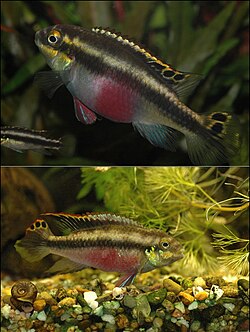
Sinking to the bottom in Kribensis is a critical sign of illness, often indicating a severe health issue. It's vital to act quickly as it can lead to secondary infections. Owners should first check water parameters and the fish's diet before seeking professional help.
Kribensis Sinking to Bottom: Common Causes
Poor Water Quality
Most LikelyHigh ammonia or nitrite levels can cause stress and weaken the fish.
Internal Parasites
Most LikelyParasites such as nematodes or flukes can cause internal discomfort and lead to sinking.
Poor Diet
PossibleLack of nutrition or overfeeding can lead to weight loss and weakness.
Infection
PossibleBacterial or fungal infections can cause systemic symptoms leading to sinking.
Stress
Less CommonStress from tank mates, water conditions, or changes can cause temporary sinking.
How to Diagnose the Cause
Follow these steps in order. Stop when you identify a likely cause and move to treatment.
- Check water parameters for ammonia, nitrite, and nitrate levels using a test kit.
Ensure the tank's water quality is within the ideal range for Kribensis.
Recommended: water test kit - Inspect the fish for external signs of parasites or infections.
Look for any lesions, spots, or unusual growths.
- Observe the fish's swimming patterns and behavior.
Determine if the fish is swimming in a normal or erratic manner.
- Assess the fish's diet and feeding habits.
Ensure the fish is receiving a balanced and varied diet.
- Consider recent changes in the tank environment or tank mates.
Changes can cause stress and lead to sinking behavior.
How to Treat Kribensis Sinking to Bottom
- Improve water quality by performing regular water changes and ensuring adequate filtration.
Lower ammonia and nitrite levels are crucial for recovery.
- Treat for internal parasites with an appropriate medication, following the manufacturer's instructions.
Use treatments like fenbendazole or praziquantel, but consult a vet first.
- Adjust the diet to include high-quality, varied foods and reduce feeding frequency if necessary.
Ensure the fish is not overfed and receives adequate nutrition.
- Treat for infections with the appropriate medication, under veterinary supervision.
Antibiotics or antifungals may be necessary, but they must be used carefully.
- Reduce stress by ensuring a peaceful environment, minimizing tank mates, and avoiding rapid changes in water conditions.
Stress can exacerbate sinking behavior and slow recovery.
How to Prevent Kribensis Sinking to Bottom
When to See a Vet
🔬 AI Symptom Checker
Not sure what's wrong? Describe your fish's symptoms to the FishCare AI and get an instant diagnosis.
Check Symptoms →Frequently Asked Questions
This guide was reviewed for biological accuracy and practical aquarium care guidance. Always test water parameters before treating a sick fish — poor water quality is the most common root cause. Consult an aquatic veterinarian if symptoms persist after 48 hours of correct treatment.
Sources: Merck Veterinary Manual — Aquarium Fishes · UF/IFAS Extension — Fish Health Management