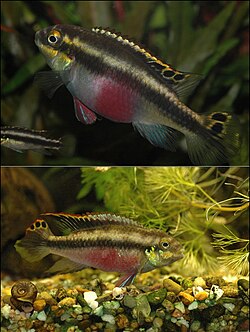
Kribensis rubbing against objects often indicates stress, parasites, or poor water quality. It's a serious issue that can lead to further health complications if not addressed promptly. Owners should first check the water parameters and ensure the tank setup is suitable for these peaceful community fish.
Kribensis Rubbing Against Objects: Common Causes
Poor Water Quality
Most LikelyHigh levels of ammonia, nitrite, or nitrate can stress the fish, leading to scratching behavior.
Parasites
Most LikelyIck, velvet, or flukes can cause intense itching, prompting the fish to rub against objects.
Water Temperature
PossibleFluctuations or extremes outside the 24.0–28.0°C range can stress Kribensis and cause scratching.
Insufficient Oxygen
PossibleLow oxygen levels in the water can make the fish feel restless and lead to rubbing.
Tank Mates
Less CommonAggressive tank mates or bullying can stress Kribensis, causing them to rub against objects to relieve stress.
How to Diagnose the Cause
Follow these steps in order. Stop when you identify a likely cause and move to treatment.
- Perform a full water test
Check for ammonia, nitrite, nitrate, pH, and temperature levels.
Recommended: Water test kit - Inspect the fish for signs of parasites
Look for white spots, spots with a velvet appearance, or flukes.
Recommended: Microscope - Observe the tank setup
Ensure the tank is well-decorated with hiding spots and that there is no aggression among tank mates.
- Monitor the fish's behavior
Check for changes in behavior such as increased aggression or restlessness.
- Assess the diet
Ensure the Kribensis is receiving a balanced diet that meets their nutritional needs.
How to Treat Kribensis Rubbing Against Objects
- Adjust water parameters
Ammonia and nitrite should be below 0, and nitrate should be kept as low as possible. Adjust pH and temperature accordingly.
- Treat for parasites
Use an appropriate medication for the type of parasite detected. Follow the treatment instructions carefully.
- Improve water quality
Perform regular water changes (20-30% weekly) and maintain good tank hygiene.
- Ensure a stress-free environment
Remove aggressive tank mates and provide plenty of hiding spots and swimming space.
- Monitor the fish's recovery
Keep a close eye on the fish to ensure the treatment is effective and no new issues arise.
How to Prevent Kribensis Rubbing Against Objects
When to See a Vet
🔬 AI Symptom Checker
Not sure what's wrong? Describe your fish's symptoms to the FishCare AI and get an instant diagnosis.
Check Symptoms →Frequently Asked Questions
This guide was reviewed for biological accuracy and practical aquarium care guidance. Always test water parameters before treating a sick fish — poor water quality is the most common root cause. Consult an aquatic veterinarian if symptoms persist after 48 hours of correct treatment.
Sources: Merck Veterinary Manual — Aquarium Fishes · UF/IFAS Extension — Fish Health Management