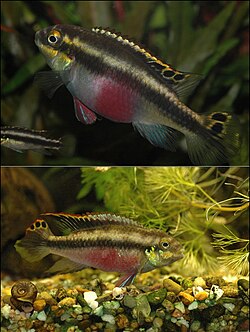
Rapid breathing in Kribensis is a serious sign of distress that can lead to severe health issues or death if not addressed promptly. These fish are sensitive to water quality and changes, making rapid breathing an urgent indicator that needs immediate attention from a veterinarian experienced with aquatic pets.
Kribensis Rapid Breathing: Common Causes
Poor Water Quality
Most LikelyAmmonia or nitrite levels can be toxic, causing stress and rapid breathing.
Inadequate Oxygen
PossibleLow dissolved oxygen levels in the tank may be due to high ammonia or organic matter breakdown, leading to rapid breathing.
Internal Issues
PossibleInfections or internal parasites can also trigger rapid breathing, often as a result of weakened immune systems.
Physical Stress
PossibleAggressive tankmates, spawning stress, or overcrowding can stress the fish and induce rapid breathing.
External Parasites
Less CommonBacterial infections or external parasites can disrupt normal gill function and cause rapid breathing.
How to Diagnose the Cause
Follow these steps in order. Stop when you identify a likely cause and move to treatment.
- Test the water parameters
Measure ammonia, nitrite, nitrate, pH, and temperature levels in the tank water.
Recommended: Water testing kit - Check the environment
Observe the tank setup for potential causes such as aggressive tankmates, poor water flow, or overcrowding.
- Inspect the fish's gills and body
Look for signs of injury, discoloration, or external parasites, which can indicate a physical issue.
- Consider the recent diet and activity levels
Dietary changes or stress from recent events may be contributing factors.
- Seek veterinary advice
If unsure, consult with a vet experienced with Kribensis for a definitive diagnosis.
How to Treat Kribensis Rapid Breathing
- Improve water quality
Change water frequently and treat with water conditioners to reduce ammonia and nitrite levels.
- Increase oxygenation
Airstone or water movement can increase oxygen levels. Avoid overfiltering that removes too much oxygen.
- Treat underlying infections or parasites
Use appropriate medications prescribed by a vet to combat any identified infections or parasites.
- Relieve stress
Separate aggressive tankmates or provide a hiding place to reduce stress in the tank.
- Monitor the fish closely
Observe the fish for any improvements or signs of deterioration to adjust treatment accordingly.
- Maintain a healthy diet
Provide a balanced diet of varied food to support the fish's overall health and immune system.
How to Prevent Kribensis Rapid Breathing
When to See a Vet
🔬 AI Symptom Checker
Not sure what's wrong? Describe your fish's symptoms to the FishCare AI and get an instant diagnosis.
Check Symptoms →Frequently Asked Questions
This guide was reviewed for biological accuracy and practical aquarium care guidance. Always test water parameters before treating a sick fish — poor water quality is the most common root cause. Consult an aquatic veterinarian if symptoms persist after 48 hours of correct treatment.
Sources: Merck Veterinary Manual — Aquarium Fishes · UF/IFAS Extension — Fish Health Management