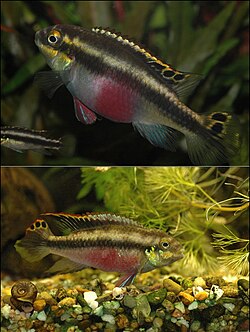
Pale or faded color in Kribensis, or Pelvicachromis pulcher, often indicates stress, poor water quality, or dietary deficiencies. It can be serious if left untreated, affecting overall health. Owners should first ensure stable water parameters and proper diet before seeking veterinary assistance.
Kribensis Pale Color: Common Causes
Poor Water Quality
Most LikelyHigh ammonia or nitrite levels can stress the fish and lead to color loss.
Dietary Deficiencies
PossibleLack of variety in diet, especially insufficient vitamin or mineral intake, can cause color fading.
Stress
PossibleTerritorial disputes or aggression from tankmates can stress Kribensis and cause color change.
Poor Health
Less CommonInfections or internal parasites can cause weakness and color loss.
How to Diagnose the Cause
Follow these steps in order. Stop when you identify a likely cause and move to treatment.
- Check water parameters
Test for ammonia, nitrite, nitrate, pH, and hardness.
Recommended: Water test kit - Inspect for external parasites
Use a magnifying glass to look for signs of parasites like ich or flukes.
- Evaluate diet
Assess the variety and nutritional value of the diet provided.
- Observe behavior
Look for signs of stress, such as aggression or changes in activity levels.
- Perform a physical examination
Inspect for internal signs of disease or parasites, which may require a microscope.
Recommended: Microscope
How to Treat Kribensis Pale Color
- Improve water quality
Increase water changes, use a water conditioner, and address underlying causes of poor water quality.
- Adjust diet
Provide a balanced diet with varied colors and textures, and consider vitamin supplements.
- Reduce stress
Ensure adequate space and territories, and remove aggressive tankmates if necessary.
- Treat for parasites
Use appropriate medications as directed by a veterinarian if external parasites are present.
- Monitor and treat underlying health issues
If internal health issues are suspected, consult a veterinarian for appropriate treatment.
How to Prevent Kribensis Pale Color
When to See a Vet
🔬 AI Symptom Checker
Not sure what's wrong? Describe your fish's symptoms to the FishCare AI and get an instant diagnosis.
Check Symptoms →Frequently Asked Questions
This guide was reviewed for biological accuracy and practical aquarium care guidance. Always test water parameters before treating a sick fish — poor water quality is the most common root cause. Consult an aquatic veterinarian if symptoms persist after 48 hours of correct treatment.
Sources: Merck Veterinary Manual — Aquarium Fishes · UF/IFAS Extension — Fish Health Management