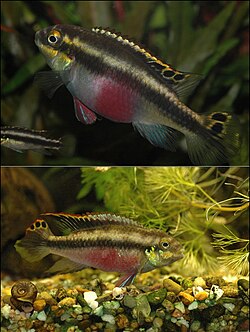
Excess mucus in Kribensis is often due to stress or disease and can be fatal if not treated promptly. Owners should observe water parameters closely, provide a stress-free environment, and seek veterinary assistance immediately for effective management.
Kribensis Mucus Coating: Common Causes
Poor Water Quality
Most LikelyHigh ammonia or nitrite levels can stress the fish and lead to increased mucus production.
Infection
Most LikelyBacterial or fungal infections can cause thick, creamy mucus on the fish's body.
Parasites
Most LikelyParasites like Ichthyophthirius can lead to a heavy mucus coating and lethargy.
Improper Diet
PossibleLack of variety or overfeeding can weaken the immune system, making the fish more susceptible to mucus production.
Environmental Changes
Less CommonRapid changes in water temperature or pH can cause stress and excessive mucus secretion.
How to Diagnose the Cause
Follow these steps in order. Stop when you identify a likely cause and move to treatment.
- Check water parameters
Test for ammonia, nitrite, nitrate, pH, and hardness.
Recommended: Water test kit - Observe behavior
Look for signs of stress, aggression, or changes in appetite.
- Visual inspection
Examine the fish for any visible parasites, wounds, or signs of infection.
- Assess diet
Review the fish's feeding routine and ensure a balanced diet is being provided.
- Consider recent changes
Identify any recent environmental or husbandry changes that might have caused stress.
How to Treat Kribensis Mucus Coating
- Improve water quality
Increase water changes to maintain optimal parameters.
- Administer antibiotics
If an infection is present, follow veterinary instructions for appropriate treatment.
- Use anti-parasitic treatments
If parasites are identified, use appropriate medications as advised by a vet.
- Adjust diet
Ensure a well-balanced diet and reduce feeding if overfeeding is suspected.
- Stabilize the environment
Gradually acclimate the fish to any changes in temperature or pH to avoid stress.
- Isolate the affected fish
To prevent spread to other tank mates, place the affected fish in a separate hospital tank if necessary.
How to Prevent Kribensis Mucus Coating
When to See a Vet
🔬 AI Symptom Checker
Not sure what's wrong? Describe your fish's symptoms to the FishCare AI and get an instant diagnosis.
Check Symptoms →Frequently Asked Questions
This guide was reviewed for biological accuracy and practical aquarium care guidance. Always test water parameters before treating a sick fish — poor water quality is the most common root cause. Consult an aquatic veterinarian if symptoms persist after 48 hours of correct treatment.
Sources: Merck Veterinary Manual — Aquarium Fishes · UF/IFAS Extension — Fish Health Management