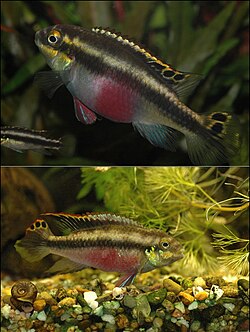
Lethargy in Kribensis, a peaceful community fish, often indicates health issues due to its sensitive nature. It can range from minor to severe, so prompt attention is crucial. As a beginner-friendly species, understanding the causes and early signs is vital for effective management.
Kribensis Lethargic or Inactive: Common Causes
Poor Water Quality
Most LikelyHigh ammonia or nitrite levels can cause stress and lead to lethargy.
Improper Diet
PossibleLack of variety or malnutrition can result in decreased energy levels.
Bacterial Infections
PossibleCommon diseases such as columnaris or fin rot can cause weakness and inactivity.
Overcrowding
PossibleCrowded tanks can stress fish, leading to decreased activity and susceptibility to diseases.
Sexual Frustration
Less CommonDuring breeding season, territorial disputes can lead to stress and decreased activity in males.
How to Diagnose the Cause
Follow these steps in order. Stop when you identify a likely cause and move to treatment.
- Observe the fish's behavior and environment
Check for signs of stress, such as erratic swimming or gasping.
Recommended: null - Test the water parameters
Measure ammonia, nitrite, nitrate, pH, and temperature to identify any abnormalities.
Recommended: Water test kit - Examine the fish's appearance
Look for signs of disease like spots, ulcers, or torn fins.
Recommended: null - Evaluate the tank conditions
Assess tank size, decor, and presence of tankmates.
Recommended: null - Consider recent changes
Reflect on any recent changes in the tank, such as new decorations or feeding schedule.
Recommended: null
How to Treat Kribensis Lethargic or Inactive
- Improve water quality
Change 20-30% of the water and ensure proper filtration.
- Adjust diet
Provide a varied diet including pellets, flake food, and live or frozen foods.
- Treat for bacterial infections
Use appropriate medication, following manufacturer's instructions, if infected.
- Reduce stress
Ensure tank is properly sized and decorated to reduce overcrowding and aggression.
- Monitor and continue care
Regularly monitor the fish and environment to ensure continued health and well-being.
How to Prevent Kribensis Lethargic or Inactive
When to See a Vet
🔬 AI Symptom Checker
Not sure what's wrong? Describe your fish's symptoms to the FishCare AI and get an instant diagnosis.
Check Symptoms →Frequently Asked Questions
This guide was reviewed for biological accuracy and practical aquarium care guidance. Always test water parameters before treating a sick fish — poor water quality is the most common root cause. Consult an aquatic veterinarian if symptoms persist after 48 hours of correct treatment.
Sources: Merck Veterinary Manual — Aquarium Fishes · UF/IFAS Extension — Fish Health Management