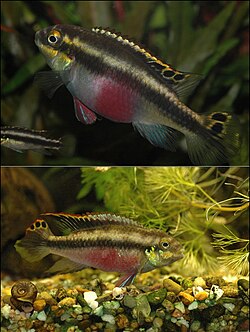
Kribensis gasping at the surface is a critical sign of oxygen deprivation or gill damage, which can be fatal if not addressed promptly. This behavior can indicate low oxygen levels, poor water quality, or underlying health issues. It's crucial for owners to understand the urgency of this situation and act immediately.
Kribensis Gasping at Surface: Common Causes
Low Oxygen Levels
Most LikelyPoor water quality or inadequate aeration can lead to low oxygen levels in the tank, causing Kribensis to gasp for air.
Poor Water Quality
Most LikelyHigh ammonia or nitrite levels can stress the fish and damage their gills, resulting in gasping.
Gill Damage
PossiblePhysical damage to the gills from aggression, parasites, or disease can impair the fish's ability to breathe normally.
Overcrowding
PossibleToo many fish in the tank can lead to competition for oxygen, exacerbating the gasping behavior.
Stress
Less CommonStress from tankmates, tank setup, or water parameters can cause Kribensis to exhibit abnormal behavior, including gasping at the surface.
How to Diagnose the Cause
Follow these steps in order. Stop when you identify a likely cause and move to treatment.
- Measure the water temperature, pH, ammonia, nitrite, and nitrate levels using a test kit.
Check for any deviations from the optimal range for Kribensis.
Recommended: Water test kit - Observe the fish's overall condition and behavior.
Look for signs of injury, aggression, or changes in swimming patterns.
- Inspect the fish's gills for damage or parasites.
Use a magnifying glass to check for abnormalities.
Recommended: Magnifying glass - Assess the tank's aeration and flow of water.
Ensure that the filter and air stones are functioning properly.
- Review recent changes in the tank or diet.
Identify any new stressors that may have affected the fish.
How to Treat Kribensis Gasping at Surface
- Increase aeration in the tank by adding more air stones or running the filter longer if possible.
This can help improve oxygen levels quickly.
- Perform a 50% water change to remove toxins and improve water quality.
Use dechlorinated water to avoid further stress.
- Treat the tank water with an ammonia binder and nitrite reducer if necessary.
This can help lower harmful levels of these toxins.
- If gill damage is suspected, treat the tank with a broad-spectrum antibiotic and provide a separate hospital tank if possible.
Follow the manufacturer's instructions for dosage and treatment duration.
- Monitor the fish's progress and continue to provide a stress-free environment.
Ensure the fish has access to food and that the tank conditions remain stable.
How to Prevent Kribensis Gasping at Surface
When to See a Vet
🔬 AI Symptom Checker
Not sure what's wrong? Describe your fish's symptoms to the FishCare AI and get an instant diagnosis.
Check Symptoms →Frequently Asked Questions
This guide was reviewed for biological accuracy and practical aquarium care guidance. Always test water parameters before treating a sick fish — poor water quality is the most common root cause. Consult an aquatic veterinarian if symptoms persist after 48 hours of correct treatment.
Sources: Merck Veterinary Manual — Aquarium Fishes · UF/IFAS Extension — Fish Health Management