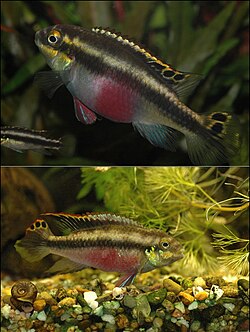
Kribensis floating at the surface can indicate serious health issues due to their shallow breathing capacity. It's urgent as it can lead to drowning. Owners must first check water parameters, as Kribensis are sensitive to sudden changes.
Kribensis Floating at Surface: Common Causes
Poor Water Quality
Most LikelyHigh ammonia or nitrite levels can overwhelm their gills, causing them to float at the surface for air.
Insufficient Oxygen
Most LikelyLow oxygen levels in the water may force Kribensis to surface for breaths.
Internal Health Issues
PossibleInternal problems like bloating or swim bladder disorders can lead to this behavior.
Overcrowding
PossibleToo many fish in the tank can reduce oxygen levels and stress the fish.
Dietary Issues
Less CommonUnbalanced diet or lack of essential nutrients can weaken their overall health, leading to this behavior.
How to Diagnose the Cause
Follow these steps in order. Stop when you identify a likely cause and move to treatment.
- Check the water quality
Test for ammonia, nitrite, nitrate, pH, and oxygen levels.
Recommended: Water test kit - Observe the fish's appearance
Look for signs of bloating, discoloration, or any other abnormalities.
- Evaluate the tank environment
Check for overcrowding and ensure the tank has proper aeration and filtration.
- Assess the fish's diet
Ensure a balanced diet that includes a variety of foods and is rich in nutrients.
- Consult the behavior patterns
Observe if the behavior occurs during feeding times or if it's triggered by specific tankmates.
How to Treat Kribensis Floating at Surface
- Improve water quality
Change 25-30% of the water immediately, and maintain regular water changes. Address the cause of ammonia or nitrite spikes.
- Increase aeration
Add more surface agitation or use an air stone to enhance oxygen levels in the water.
- Adjust diet
Ensure a varied diet rich in vitamins and minerals, and consider supplements if necessary.
- Provide hiding spots
If stress is a factor, add more plants and hiding spots to the tank.
- Monitor for improvement
Keep a close eye on the fish's behavior and health. If symptoms persist, seek veterinary assistance.
How to Prevent Kribensis Floating at Surface
When to See a Vet
🔬 AI Symptom Checker
Not sure what's wrong? Describe your fish's symptoms to the FishCare AI and get an instant diagnosis.
Check Symptoms →Frequently Asked Questions
This guide was reviewed for biological accuracy and practical aquarium care guidance. Always test water parameters before treating a sick fish — poor water quality is the most common root cause. Consult an aquatic veterinarian if symptoms persist after 48 hours of correct treatment.
Sources: Merck Veterinary Manual — Aquarium Fishes · UF/IFAS Extension — Fish Health Management