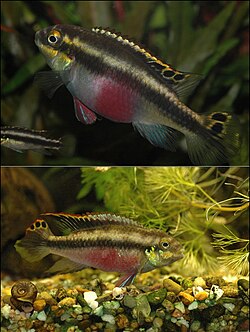
Curved or curled body in Kribensis, known as S-shaped body, is a serious condition indicating potential health issues. It can be caused by poor water quality, nutritional deficiencies, or diseases, and requires immediate attention. Owners should monitor water parameters and consider dietary adjustments.
Kribensis Curled Body: Common Causes
Poor Water Quality
Most LikelyHigh levels of ammonia, nitrite, or nitrate can cause stress and lead to this condition.
Dietary Deficiencies
Most LikelyLack of essential nutrients, especially vitamin C and calcium, can result in skeletal deformities.
Infections
PossibleBacterial or parasitic infections can lead to curvature in the spine and body.
Genetic Disorders
Less CommonIn some cases, genetic factors may contribute to the development of this condition.
How to Diagnose the Cause
Follow these steps in order. Stop when you identify a likely cause and move to treatment.
- Perform a visual inspection of the fish for any signs of injury or external parasites.
Check for any visible wounds or parasites on the fish's body.
- Test the water parameters for ammonia, nitrite, nitrate, pH, and temperature.
Use a water test kit to measure these parameters.
Recommended: Water test kit - Observe the fish's diet and feeding habits.
Ensure a balanced diet rich in vitamins and minerals.
- Inspect the tank for any signs of aggression or bullying that could cause stress.
Ensure the tank is spacious and the fish are not being bullied by tankmates.
- Consider the fish's age and breeding status, as these can influence the condition.
Older fish or those in breeding condition may be more susceptible.
How to Treat Kribensis Curled Body
- Improve water quality by increasing water changes and ensuring proper filtration.
Perform regular water changes and maintain a stable water parameter environment.
- Adjust the diet to include more vitamin C and calcium-rich foods.
Feed vitamin C supplements and provide foods like spinach or kale.
- Administer antibiotics or antiparasitic treatments as prescribed by a veterinarian.
Follow the vet's instructions for medication and dosage.
- Provide a stress-free environment by reducing aggression and ensuring adequate space.
Remove aggressive tankmates or rearrange the tank to reduce stress.
- Monitor the fish's progress and adjust treatment as needed.
Regularly assess the fish's health and consult with a vet if there is no improvement.
How to Prevent Kribensis Curled Body
When to See a Vet
🔬 AI Symptom Checker
Not sure what's wrong? Describe your fish's symptoms to the FishCare AI and get an instant diagnosis.
Check Symptoms →Frequently Asked Questions
This guide was reviewed for biological accuracy and practical aquarium care guidance. Always test water parameters before treating a sick fish — poor water quality is the most common root cause. Consult an aquatic veterinarian if symptoms persist after 48 hours of correct treatment.
Sources: Merck Veterinary Manual — Aquarium Fishes · UF/IFAS Extension — Fish Health Management