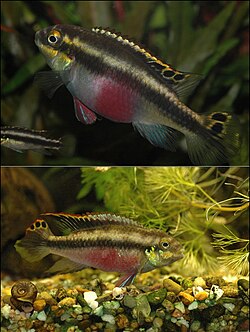
Cloudy eyes in Kribensis, often due to poor water quality or injury, can lead to blindness if not treated promptly. This condition is urgent and requires immediate attention to prevent severe health complications.
Kribensis Cloudy Eyes: Common Causes
Poor Water Quality
Most LikelyHigh ammonia or nitrite levels can cause stress, leading to cloudy eyes.
Infection
PossibleBacterial or fungal infections can affect the eyes, causing opacity and discomfort.
Physical Injury
Less CommonAn injury from a fight or an impact can cause the eyes to cloud over.
How to Diagnose the Cause
Follow these steps in order. Stop when you identify a likely cause and move to treatment.
- Observe the fish's behavior and appearance
Look for signs of stress, injury, or other symptoms that may accompany cloudy eyes.
- Test the water parameters
Check ammonia, nitrite, and nitrate levels. pH and temperature should also be within the optimal range for Kribensis.
Recommended: Water test kit - Inspect the fish's environment
Ensure the tank is well-maintained, with no sharp objects or aggressive tankmates that could cause injury.
How to Treat Kribensis Cloudy Eyes
- Improve water quality
Perform water changes and use water treatments to reduce ammonia and nitrite levels.
- Administer antibiotics or antifungal medication
Follow the vet's prescription for the appropriate medication based on the diagnosis.
- Isolate the affected fish
Keep the fish in a separate tank to prevent the spread of infection to other tankmates.
How to Prevent Kribensis Cloudy Eyes
When to See a Vet
🔬 AI Symptom Checker
Not sure what's wrong? Describe your fish's symptoms to the FishCare AI and get an instant diagnosis.
Check Symptoms →Frequently Asked Questions
This guide was reviewed for biological accuracy and practical aquarium care guidance. Always test water parameters before treating a sick fish — poor water quality is the most common root cause. Consult an aquatic veterinarian if symptoms persist after 48 hours of correct treatment.
Sources: Merck Veterinary Manual — Aquarium Fishes · UF/IFAS Extension — Fish Health Management