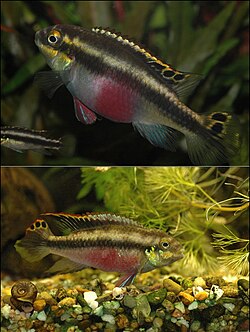
Kribensis, known for their peaceful demeanor, may suddenly become aggressive due to stress, territory disputes, or hormonal changes. This behavior can be unsettling but is often manageable with the right approach. Understanding the underlying causes is crucial for effective resolution.
Kribensis Aggressive: Common Causes
Stress
Most LikelyEnvironmental stressors like water quality issues, temperature fluctuations, or overcrowding can trigger aggression.
Territory Defense
Most LikelyDuring breeding season, Kribensis pairs can become particularly territorial, leading to aggression towards others.
Hormonal Changes
PossibleChanges in hormones, especially during breeding, can cause aggression in both males and females.
Dietary Issues
PossiblePoor nutrition or irregular feeding schedules can lead to stress and aggression.
New Tank Mates
Less CommonIntroducing new fish can cause aggression as the Kribensis establishes dominance in the tank.
How to Diagnose the Cause
Follow these steps in order. Stop when you identify a likely cause and move to treatment.
- Observe the fish's behavior in different tank conditions
Note any changes in behavior when the fish is in different areas of the tank or during different times of the day.
- Check water parameters
Ensure the water quality is within the optimal range for Kribensis, including temperature, pH, and ammonia/nitrite/nitrate levels.
Recommended: Water test kit - Assess diet and feeding routine
Evaluate the fish's diet and feeding schedule for consistency and nutritional balance.
- Inspect the tank for potential stressors
Look for any recent changes in the tank setup, such as new decorations or overcrowding.
- Monitor for signs of breeding activity
Check for breeding behavior, such as territorial defense or nest-building, which can trigger aggression.
How to Treat Kribensis Aggressive
- Improve water quality
Perform regular water changes and address any imbalances in water parameters.
- Ensure proper diet and feeding
Provide a balanced diet and maintain a regular feeding schedule.
- Reduce stress
Remove any potential stressors from the tank and provide hiding spots for the fish.
- Consider separating aggressive fish
If aggression is ongoing, consider temporarily separating the aggressive fish into a separate tank.
- Monitor and adjust
Continuously monitor the fish's behavior and adjust the environment or care routine as needed.
How to Prevent Kribensis Aggressive
When to See a Vet
🔬 AI Symptom Checker
Not sure what's wrong? Describe your fish's symptoms to the FishCare AI and get an instant diagnosis.
Check Symptoms →Frequently Asked Questions
This guide was reviewed for biological accuracy and practical aquarium care guidance. Always test water parameters before treating a sick fish — poor water quality is the most common root cause. Consult an aquatic veterinarian if symptoms persist after 48 hours of correct treatment.
Sources: Merck Veterinary Manual — Aquarium Fishes · UF/IFAS Extension — Fish Health Management