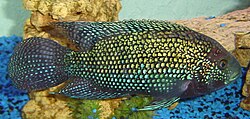
Excess mucus coating in Jack Dempseys often indicates a serious underlying issue. It's critical to address promptly, as it can lead to more severe health problems. Owners should first assess the fish's overall health, water parameters, and recent changes in the aquarium.
Jack Dempsey Mucus Coating: Common Causes
Poor Water Quality
Most LikelyAmmonia, nitrite, and nitrate levels can be toxic to Jack Dempseys, leading to mucus production as a defense mechanism.
Infections
Most LikelyBacterial or fungal infections can cause excess mucus. Stress and poor nutrition weaken the immune system, making the fish more susceptible.
Dietary Issues
PossibleAn imbalanced diet or overfeeding can lead to internal issues, manifesting as mucus coating on the fish.
Stress
PossibleTerritorial behavior and aggressive interactions can cause stress, leading to increased mucus production.
Parasites
Less CommonExternal parasites such as Ichthyophthirius multifiliis can cause a mucusy appearance, although this is less common in Jack Dempseys.
How to Diagnose the Cause
Follow these steps in order. Stop when you identify a likely cause and move to treatment.
- Inspect the fish for any other signs of illness, such as changes in behavior or appetite.
Look for signs of stress or aggression.
Recommended: microscope - Test the water quality parameters for ammonia, nitrite, nitrate, pH, and temperature.
Ensure water conditions are within the recommended range for Jack Dempseys.
Recommended: water test kit - Check the diet and feeding routine for balance and excess.
Evaluate if the diet is rich in vitamins and minerals.
- Examine the fish for external parasites using a magnifying glass or microscope.
Look for any spots or white spots on the skin.
Recommended: microscope - Consult a veterinary specialist for further guidance if necessary.
A vet can perform more advanced tests to identify the cause.
How to Treat Jack Dempsey Mucus Coating
- Improve water quality by carrying out regular water changes and using appropriate filtration systems.
Keep the water parameters within the recommended range.
- Administer appropriate medications as advised by a vet to treat infections or parasites.
Follow the dosage instructions carefully.
- Adjust the diet to include high-quality foods and reduce feeding frequency to prevent overfeeding.
Ensure a varied diet with proteins and vegetables.
- Provide a stress-free environment by minimizing aggression and territorial disputes among fish.
Consider adding more space or using cover for the fish.
- Monitor the fish's response to the treatment and consult a vet if there's no improvement.
Continue with the treatment as prescribed.
How to Prevent Jack Dempsey Mucus Coating
When to See a Vet
🔬 AI Symptom Checker
Not sure what's wrong? Describe your fish's symptoms to the FishCare AI and get an instant diagnosis.
Check Symptoms →Frequently Asked Questions
This guide was reviewed for biological accuracy and practical aquarium care guidance. Always test water parameters before treating a sick fish — poor water quality is the most common root cause. Consult an aquatic veterinarian if symptoms persist after 48 hours of correct treatment.
Sources: Merck Veterinary Manual — Aquarium Fishes · UF/IFAS Extension — Fish Health Management