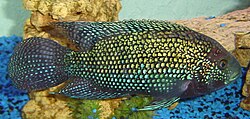
Darting or flashing in Jack Dempseys often indicates an external irritant, such as ich or parasites, which can be serious if not addressed promptly. As an aggressive, territorial fish, stress can exacerbate this behavior. Owners should first assess the tank conditions and diet.
Jack Dempsey Darting or Flashing: Common Causes
Ich (Ichthyophthirius multifiliis)
Most LikelyCaused by a tiny parasite that can infect fish and lead to scratching and darting.
External Parasites
PossibleBacteria or parasites like flukes can cause skin irritations, prompting the fish to dart and rub against surfaces.
Poor Water Quality
PossibleHigh ammonia or nitrite levels can stress the fish, causing erratic movement and flashing.
Poor Diet
Less CommonInsufficient nutrients or poor diet quality can lead to stress and behavioral changes.
Stress from Tank Mates
Less CommonAggression from tank mates or overcrowding can cause stress and subsequent darting behavior.
How to Diagnose the Cause
Follow these steps in order. Stop when you identify a likely cause and move to treatment.
- Inspect the fish for visible parasites or lesions.
Look for spots or white specks on the fish's body.
Recommended: magnifying glass - Check water parameters for ammonia, nitrite, and nitrate levels.
Use a test kit to measure these parameters.
Recommended: water test kit - Observe the fish's diet and feeding habits.
Ensure a balanced and varied diet is provided.
- Assess the tank environment for signs of aggression or overcrowding.
Check for territorial disputes among tank mates.
- Monitor the fish's behavior over several days to determine if the problem persists.
Record any changes in behavior or appearance.
How to Treat Jack Dempsey Darting or Flashing
- Treat for Ich if present, using an appropriate medication as directed by a vet.
Follow the treatment protocol carefully to avoid resistance.
- Improve water quality by changing water and using water conditioners to neutralize chlorine and chloramine.
Maintain regular water changes to keep ammonia and nitrite levels low.
- Adjust the diet to ensure proper nutrition and reduce stress.
Provide a variety of high-quality foods and consider supplements.
- Resolve aggression or overcrowding issues by providing adequate space or separating aggressive fish.
Monitor tank dynamics and address any conflicts promptly.
- If the problem persists, consult a veterinarian specializing in fish health for further evaluation and treatment.
Early intervention is crucial to prevent long-term health issues.
How to Prevent Jack Dempsey Darting or Flashing
When to See a Vet
🔬 AI Symptom Checker
Not sure what's wrong? Describe your fish's symptoms to the FishCare AI and get an instant diagnosis.
Check Symptoms →Frequently Asked Questions
This guide was reviewed for biological accuracy and practical aquarium care guidance. Always test water parameters before treating a sick fish — poor water quality is the most common root cause. Consult an aquatic veterinarian if symptoms persist after 48 hours of correct treatment.
Sources: Merck Veterinary Manual — Aquarium Fishes · UF/IFAS Extension — Fish Health Management