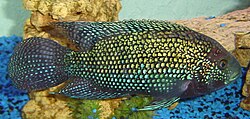
Black spots on Jack Dempseys are often a sign of parasitic or bacterial infections, which can be serious if not treated promptly. As an aggressive and territorial species, stress can exacerbate these issues. Owners should first assess the tank conditions and recent changes.
Jack Dempsey Black Spots: Common Causes
Ichthyophthirius multifiliis (Ich)
Most LikelyAlso known as white spot disease, Ich is a highly contagious protozoan that causes white spots, which can turn black in stressed fish.
Bacterial infections
PossibleThese can arise from poor water quality, injury, or stress and may cause spots on the fins, body, or skin.
Amoebic infections
Less CommonLess common, but amoebic infections can cause spots on the body and fins, especially in fish with weakened immune systems.
How to Diagnose the Cause
Follow these steps in order. Stop when you identify a likely cause and move to treatment.
- Observe the fish's behavior and appearance for other signs of illness such as clamped fins, loss of appetite, or gasping at the surface.
This can help identify if the spots are part of a larger health issue.
- Check the tank water parameters, including ammonia, nitrite, nitrate, pH, and temperature, to ensure they are within the Jack Dempsey's ideal range.
Poor water quality can stress the fish and contribute to infections.
Recommended: Water test kit - Use a magnifying glass to inspect the spots closely to determine their shape, size, and whether they appear to be moving.
This can help distinguish between parasites, bacteria, and other conditions.
Recommended: Magnifying glass - Perform a physical examination of the fish to look for signs of injury or stress, which can predispose them to infections.
This may involve gently palpating the fish's body.
- Consider the fish's diet and recent changes, as nutritional deficiencies can weaken the immune system and lead to health issues.
Ensure a balanced diet rich in protein and vitamins is provided.
How to Treat Jack Dempsey Black Spots
- Perform a partial water change (20-30%) to improve water quality and reduce stress on the fish.
Use dechlorinated water and maintain the tank parameters within the Jack Dempsey's ideal range.
- Administer an appropriate medication according to the diagnosis, such as an ichthyophthirius treatment or a broad-spectrum antibacterial agent.
Follow the manufacturer's instructions carefully.
- Ensure the fish is well-fed with a high-protein diet to support immune function and recovery.
Avoid overfeeding to prevent water quality issues.
- Reduce stress by minimizing tank disturbances and ensuring adequate swimming space and territories.
This may involve rearranging decor or using cover to provide hiding spots.
- Monitor the fish closely during treatment and adjust the treatment plan as necessary based on its response.
This may include changing the medication or adjusting the dosage if the fish is not improving or showing signs of stress.
How to Prevent Jack Dempsey Black Spots
When to See a Vet
🔬 AI Symptom Checker
Not sure what's wrong? Describe your fish's symptoms to the FishCare AI and get an instant diagnosis.
Check Symptoms →Frequently Asked Questions
This guide was reviewed for biological accuracy and practical aquarium care guidance. Always test water parameters before treating a sick fish — poor water quality is the most common root cause. Consult an aquatic veterinarian if symptoms persist after 48 hours of correct treatment.
Sources: Merck Veterinary Manual — Aquarium Fishes · UF/IFAS Extension — Fish Health Management