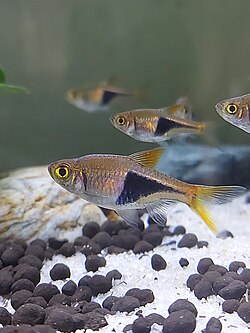
Curved or curled bodies in Harlequin Rasboras are often a sign of serious health issues, indicating a compromised musculoskeletal system. This condition can be life-threatening and requires immediate attention. Owners should be aware that it can be caused by various factors, including poor water quality, nutritional deficiencies, and diseases.
Harlequin Rasbora Curled Body: Common Causes
Poor Water Quality
Most LikelyHigh ammonia or nitrite levels can stress the fish, leading to muscle weakness and curvature.
Nutritional Deficiencies
Most LikelyLack of essential nutrients, particularly vitamin C and calcium, can cause skeletal issues and body curvature.
External Parasites
PossibleInfections like ich or velvet can cause muscle inflammation and curvature.
Internal Parasites
PossibleInternal parasites can disrupt the fish's nutrient absorption, leading to muscle weakness and curvature.
Genetic Disorders
Less CommonIn some cases, curvature may be genetic, though this is less common.
How to Diagnose the Cause
Follow these steps in order. Stop when you identify a likely cause and move to treatment.
- Observe the fish's swimming patterns and overall appearance.
Look for signs of stress, aggression, or changes in behavior.
- Check the water parameters for ammonia, nitrite, nitrate, pH, and temperature.
Use a reliable test kit to ensure the water quality meets the Harlequin Rasbora's requirements.
Recommended: Water test kit - Inspect the fish for external parasites or signs of internal disease.
Look for spots, slime, or unusual behaviors that might indicate a parasitic infection.
- Review the fish's diet and feeding schedule.
Ensure the diet is balanced and includes a variety of foods rich in vitamins and minerals.
- Consider the fish's environment, including tank size and tankmates.
Ensure the tank is adequately sized and the tankmates are compatible with the Harlequin Rasbora.
How to Treat Harlequin Rasbora Curled Body
- Improve water quality by performing regular water changes and ensuring proper filtration.
Change 20-30% of the water weekly to maintain optimal conditions.
- Adjust the diet to include more vitamin C and calcium-rich foods.
Use vitamin C supplements and foods like spirulina or brine shrimp to support bone health.
- Treat for external parasites with an appropriate medication, following the instructions carefully.
Use medications like malachite green or formalin, but be cautious as they can be harmful to the fish.
- If internal parasites are suspected, consult a vet for a specific treatment plan.
Internal parasites may require more intensive treatment and veterinary guidance.
- If genetic issues are suspected, consider rehoming the fish to a compatible environment or consult a vet for advice.
Genetic conditions may not be reversible, but proper care can help manage symptoms.
How to Prevent Harlequin Rasbora Curled Body
When to See a Vet
🔬 AI Symptom Checker
Not sure what's wrong? Describe your fish's symptoms to the FishCare AI and get an instant diagnosis.
Check Symptoms →Frequently Asked Questions
This guide was reviewed for biological accuracy and practical aquarium care guidance. Always test water parameters before treating a sick fish — poor water quality is the most common root cause. Consult an aquatic veterinarian if symptoms persist after 48 hours of correct treatment.
Sources: Merck Veterinary Manual — Aquarium Fishes · UF/IFAS Extension — Fish Health Management