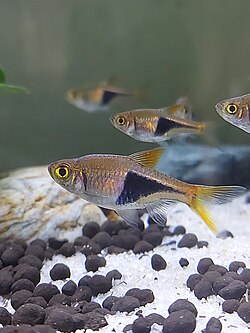
Bulging eyes, known as Popeye, in Harlequin Rasbora is a serious condition often caused by poor water quality or injury. It can lead to secondary infections and is life-threatening if not treated promptly. Owners should first ensure the tank conditions are optimal and rule out other causes before seeking professional help.
Harlequin Rasbora Bulging Eyes (Popeye): Common Causes
Poor Water Quality
Most LikelyHigh levels of ammonia, nitrite, or nitrate can cause stress and lead to Popeye.
Infection
Most LikelyBacterial infections, often secondary to stress, can result in Popeye.
Injury
PossiblePhysical injury from tank mates or decor can cause immediate swelling and Popeye.
Malnutrition
PossibleDeficiencies in certain nutrients, particularly vitamin C, can lead to Popeye.
Genetic Factors
Less CommonSome individuals may be genetically predisposed to Popeye, especially in crowded tanks.
How to Diagnose the Cause
Follow these steps in order. Stop when you identify a likely cause and move to treatment.
- Inspect the tank for signs of aggression or injury.
Check for nipping or fighting with tank mates.
- Test the water parameters for ammonia, nitrite, and nitrate.
Use a reliable water test kit to ensure they are within the optimal range.
Recommended: Water test kit - Check the diet to ensure it is balanced and contains adequate vitamin C.
Vitamin C deficiency can contribute to Popeye.
- Observe the fish for other symptoms such as loss of appetite or lethargy.
These can indicate a more serious underlying condition.
- Consult with a vet or experienced aquarist if the cause remains unclear.
They can provide further guidance and treatment options.
How to Treat Harlequin Rasbora Bulging Eyes (Popeye)
- Improve water quality by increasing water changes and treating with an ammonia-neutralizing product if necessary.
This will help alleviate stress and reduce the likelihood of secondary infections.
- Administer an antibiotic to treat bacterial infections, as prescribed by a vet.
Ensure the antibiotic is safe for Harlequin Rasbora and the tank's overall environment.
- Provide a balanced diet rich in vitamin C, possibly in the form of vitamin C supplements or foods naturally high in vitamin C.
This will support the fish's immune system and aid recovery.
- Ensure the fish is in a stress-free environment, away from aggressive tank mates.
This will help prevent further injury and stress-related issues.
- Monitor the fish's progress closely and adjust treatment as needed.
Prompt intervention is key to successful recovery from Popeye.
How to Prevent Harlequin Rasbora Bulging Eyes (Popeye)
When to See a Vet
🔬 AI Symptom Checker
Not sure what's wrong? Describe your fish's symptoms to the FishCare AI and get an instant diagnosis.
Check Symptoms →Frequently Asked Questions
This guide was reviewed for biological accuracy and practical aquarium care guidance. Always test water parameters before treating a sick fish — poor water quality is the most common root cause. Consult an aquatic veterinarian if symptoms persist after 48 hours of correct treatment.
Sources: Merck Veterinary Manual — Aquarium Fishes · UF/IFAS Extension — Fish Health Management