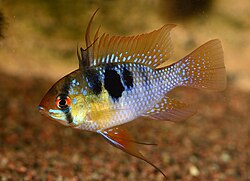
Red streaks on German Blue Rams can indicate a serious condition, such as Ichthyophthirius multifiliis or ammonia toxicity, which can be fatal if not treated promptly. Owners should first ensure water quality parameters are within the optimal range for this species and consider the possibility of an infectious disease.
German Blue Ram Red Streaks on Body: Common Causes
Ichthyophthirius multifiliis (Ich)
Most LikelyAlso known as ichthyophthirius, this protozoan causes external parasites to appear as red streaks.
Ammonia toxicity
Most LikelyHigh ammonia levels can cause internal hemorrhaging and red streaks, often due to poor water quality or inadequate filtration.
Fin rot
PossibleBacterial infection can lead to red streaks along the fins, often accompanied by fin damage.
Stress or injury
Less CommonPhysical stress or injury can also cause red streaks, although less common than infections.
How to Diagnose the Cause
Follow these steps in order. Stop when you identify a likely cause and move to treatment.
- Inspect the fish for additional signs of disease, such as clamped fins, loss of appetite, or lethargy.
This will help determine if the red streaks are due to an infectious disease or another cause.
- Check the water parameters for ammonia, nitrite, nitrate, pH, and temperature.
Ensure the parameters are within the recommended range for German Blue Rams.
Recommended: Water testing kit - Observe the fish's behavior in the tank and note any changes in swimming patterns or interaction with tankmates.
This can provide clues about the cause of the red streaks.
- If available, take a water sample to a vet for a professional assessment.
This will help identify any unseen issues that could be causing the red streaks.
Recommended: Water sample collection kit - Consider the recent changes in the tank, such as new tankmates or recent water changes.
These can stress the fish and potentially lead to health issues.
How to Treat German Blue Ram Red Streaks on Body
- Perform a 25% water change to reduce ammonia and nitrite levels, and add an ammonia binder to the filter if necessary.
This will help alleviate the stress on the fish's immune system.
- Treat the tank with an appropriate medication, such as formalin or malachite green, if the red streaks are due to Ich or fin rot.
Follow the dosage instructions carefully.
- Ensure the tank is well-aerated and the temperature is stable, as German Blue Rams are sensitive to changes.
Stress can exacerbate health issues.
- Feed a high-quality diet and consider adding vitamin supplements to support the fish's immune system.
A healthy diet is crucial for recovery.
- Observe the fish closely for any signs of improvement or worsening of the condition.
This will help determine the effectiveness of the treatment and whether further action is needed.
How to Prevent German Blue Ram Red Streaks on Body
When to See a Vet
🔬 AI Symptom Checker
Not sure what's wrong? Describe your fish's symptoms to the FishCare AI and get an instant diagnosis.
Check Symptoms →Frequently Asked Questions
This guide was reviewed for biological accuracy and practical aquarium care guidance. Always test water parameters before treating a sick fish — poor water quality is the most common root cause. Consult an aquatic veterinarian if symptoms persist after 48 hours of correct treatment.
Sources: Merck Veterinary Manual — Aquarium Fishes · UF/IFAS Extension — Fish Health Management