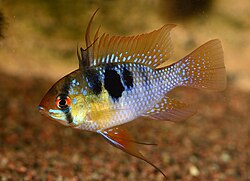
Curved or curled bodies in German Blue Rams are a serious sign of skeletal deformities, often due to poor water quality or dietary deficiencies. This condition can lead to impaired swimming and increased stress, so immediate attention is crucial. Owners should first ensure the tank conditions are optimal for these fish.
German Blue Ram Curled Body: Common Causes
Poor Water Quality
Most LikelyHigh ammonia or nitrite levels can cause skeletal deformities.
Dietary Deficiencies
Most LikelyLack of calcium or vitamin D3 can lead to bone weakness and curvature.
Genetic Disorders
PossibleIn some cases, the condition may be genetic, though less common.
Infection
PossibleBacterial infections can cause internal inflammation leading to curvature.
Stress
Less CommonHigh stress levels can exacerbate skeletal issues, often due to tank overcrowding or aggression.
How to Diagnose the Cause
Follow these steps in order. Stop when you identify a likely cause and move to treatment.
- Observe the fish's swimming pattern and overall behavior.
Look for signs of difficulty swimming or changes in behavior.
- Test the water parameters for ammonia, nitrite, nitrate, pH, and hardness.
Use a water test kit to ensure the tank conditions are within the optimal range for German Blue Rams.
Recommended: Water test kit - Examine the fish's diet and feeding schedule.
Ensure the fish is receiving a balanced diet rich in calcium and vitamin D3.
- Check for signs of infection, such as ulcers or discoloration.
Inspect the fish for any visible signs of disease.
- Review the tank environment for stressors, such as overcrowding or aggression.
Assess the tank setup and ensure it provides adequate space and hiding spots.
How to Treat German Blue Ram Curled Body
- Improve water quality by performing regular water changes and treating for ammonia and nitrite.
Change 25-30% of the water weekly and use an ammonia binder if necessary.
- Adjust the diet to include foods rich in calcium and vitamin D3, such as spirulina or specially formulated cichlid pellets.
Ensure the fish is receiving a balanced diet that supports bone health.
- Administer antibiotics if an infection is present, following the vet's instructions.
Use only antibiotics prescribed by a veterinarian to avoid resistance and side effects.
- Reduce stress by ensuring the tank is well-maintained and providing adequate hiding spots.
Remove any aggressive tank mates and ensure the tank is spacious enough for the fish to swim freely.
- Monitor the fish's progress and continue treatment until the curved or curled body straightens out.
Regularly assess the fish's health and adjust the treatment plan as needed.
How to Prevent German Blue Ram Curled Body
When to See a Vet
🔬 AI Symptom Checker
Not sure what's wrong? Describe your fish's symptoms to the FishCare AI and get an instant diagnosis.
Check Symptoms →Frequently Asked Questions
This guide was reviewed for biological accuracy and practical aquarium care guidance. Always test water parameters before treating a sick fish — poor water quality is the most common root cause. Consult an aquatic veterinarian if symptoms persist after 48 hours of correct treatment.
Sources: Merck Veterinary Manual — Aquarium Fishes · UF/IFAS Extension — Fish Health Management