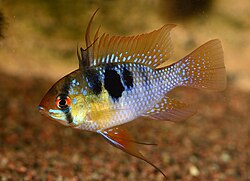
Suddenly aggressive behavior in German Blue Rams can stem from several stressors and may be serious, impacting their social dynamics. Owners should first ensure water parameters are stable and consistent, and the tank is well-maintained.
German Blue Ram Aggressive: Common Causes
Sexual Maturity
Most LikelyWhen reaching sexual maturity, males can become more territorial and aggressive.
Habitat Changes
PossibleDrastic changes in the tank's layout or water parameters can stress the fish, leading to aggression.
Inadequate Space
PossibleInsufficient swimming space can cause stress and aggression, especially among territorial males.
Poor Diet
PossibleInadequate nutrition can weaken the immune system, making the fish more prone to stress and aggression.
Tank Mates
Less CommonIntroducing incompatible tank mates can trigger aggression, as the German Blue Ram is a peaceful species that prefers its own species or similarly sized companions.
How to Diagnose the Cause
Follow these steps in order. Stop when you identify a likely cause and move to treatment.
- Check the tank's water parameters for stability in temperature and pH levels.
Use a reliable test kit to ensure the environment is suitable for the German Blue Ram.
Recommended: Water test kit - Observe the tank for any signs of physical damage or disease in the affected fish.
Look for any external injuries or signs of internal illness that may be causing the aggression.
- Assess the tank's size and layout to ensure it meets the space requirements for German Blue Rams.
Provide enough space for the fish to swim freely and avoid overcrowding.
- Review the feeding schedule and diet to ensure it is balanced and appropriate.
Feed a varied diet of high-quality flakes and live foods like daphnia or mosquito larvae.
- Evaluate the tank mates for compatibility with the German Blue Ram.
Ensure the tank contains compatible species and the number of fish does not exceed the tank's capacity.
How to Treat German Blue Ram Aggressive
- Stabilize water parameters by gradually adjusting pH and temperature as needed.
Use water conditioner to reduce stress from ammonia or chlorine and maintain a consistent environment.
- Provide additional hiding spots or partitions in the tank to reduce stress and aggression.
Use plants or ornaments to create visual barriers and reduce territory disputes.
- Improve the diet by introducing more protein-rich foods and reducing the frequency of feedings if overfeeding is suspected.
Ensure the fish receive a balanced and varied diet to support their health and reduce aggression.
- Consider removing the aggressive fish to a separate tank if necessary, to prevent further aggression and stress.
Monitor the behavior and reintroduce if the issue resolves and tank conditions improve.
- Reassess the tank mates and introduce compatible species if the current ones are not suitable.
Ensure the new tank mates are of similar size and temperament to avoid aggression and dominance issues.
How to Prevent German Blue Ram Aggressive
When to See a Vet
🔬 AI Symptom Checker
Not sure what's wrong? Describe your fish's symptoms to the FishCare AI and get an instant diagnosis.
Check Symptoms →Frequently Asked Questions
This guide was reviewed for biological accuracy and practical aquarium care guidance. Always test water parameters before treating a sick fish — poor water quality is the most common root cause. Consult an aquatic veterinarian if symptoms persist after 48 hours of correct treatment.
Sources: Merck Veterinary Manual — Aquarium Fishes · UF/IFAS Extension — Fish Health Management