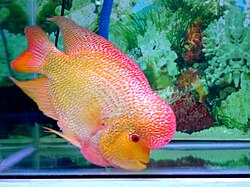
Sinking to the bottom is a critical issue in Flowerhorn Cichlids, often indicating severe health problems. It can be life-threatening and requires immediate attention. Understanding the specific needs of Flowerhorn Cichlids is crucial, as they are highly sensitive to water quality and diet.
Flowerhorn Cichlid Sinking to Bottom: Common Causes
Poor Water Quality
Most LikelyHigh ammonia or nitrite levels can cause stress and lead to sinking behavior.
Malnutrition
Most LikelyLack of proper nutrition, especially vitamins and minerals, can weaken the fish and make them sink.
Infection
Most LikelyBacterial or parasitic infections can cause physical distress and lead to the fish sinking.
Internal Issues
PossibleInternal organ problems, such as swim bladder issues, can result in the fish being unable to stay afloat.
Stress
Less CommonExcessive stress from aggression, overcrowding, or sudden changes can cause Flowerhorn Cichlids to sink.
How to Diagnose the Cause
Follow these steps in order. Stop when you identify a likely cause and move to treatment.
- Check water parameters
Test ammonia, nitrite, nitrate, pH, and temperature. Look for deviations from the ideal range.
Recommended: test kit - Observe physical symptoms
Inspect the fish for signs of infection, such as ulcers or spots, or internal bloating.
- Consider diet and environment
Evaluate the diet and tank conditions, including aggression levels and tank size.
- Check for external parasites
Use a magnifying glass to look for external parasites like ich or flukes.
Recommended: magnifying glass - Consult with a vet
If unsure, consult with a veterinarian experienced with cichlids for a proper diagnosis.
How to Treat Flowerhorn Cichlid Sinking to Bottom
- Improve water quality
Change 20-30% of the water and ensure the tank is filtered well.
- Adjust diet
Feed a balanced diet rich in vitamins and minerals. Consider a diet supplement for additional nutrition.
- Treat infections
Use appropriate medications as recommended by a vet. Follow the treatment regimen carefully.
- Address internal issues
For internal problems, veterinary intervention is often necessary. Follow vet's advice.
- Reduce stress
Ensure the tank is spacious, remove aggressive tankmates, and maintain consistent tank conditions.
How to Prevent Flowerhorn Cichlid Sinking to Bottom
When to See a Vet
🔬 AI Symptom Checker
Not sure what's wrong? Describe your fish's symptoms to the FishCare AI and get an instant diagnosis.
Check Symptoms →Frequently Asked Questions
This guide was reviewed for biological accuracy and practical aquarium care guidance. Always test water parameters before treating a sick fish — poor water quality is the most common root cause. Consult an aquatic veterinarian if symptoms persist after 48 hours of correct treatment.
Sources: Merck Veterinary Manual — Aquarium Fishes · UF/IFAS Extension — Fish Health Management